Tuttle Marsh, a wetland worked for wildlife
South of Oscoda a gravel road runs into a wide wetland of dikes, cattails and open water, where ospreys hunt, herons stand in the shallows and rails call from cover.
- ALLOW
- About 1 to 1.5 hours
- FROM OSCODA
- About 20 minutes south
- PARK OR STAND
- Pull-offs along Tuttle Marsh Road, clear of the road
- NEXT LEG
- About 30 minutes north-west to Monument Road
- BEST MONTHS
- April to June, September, October
- BRING
- Binoculars, water, insect repellent, waterproof boots
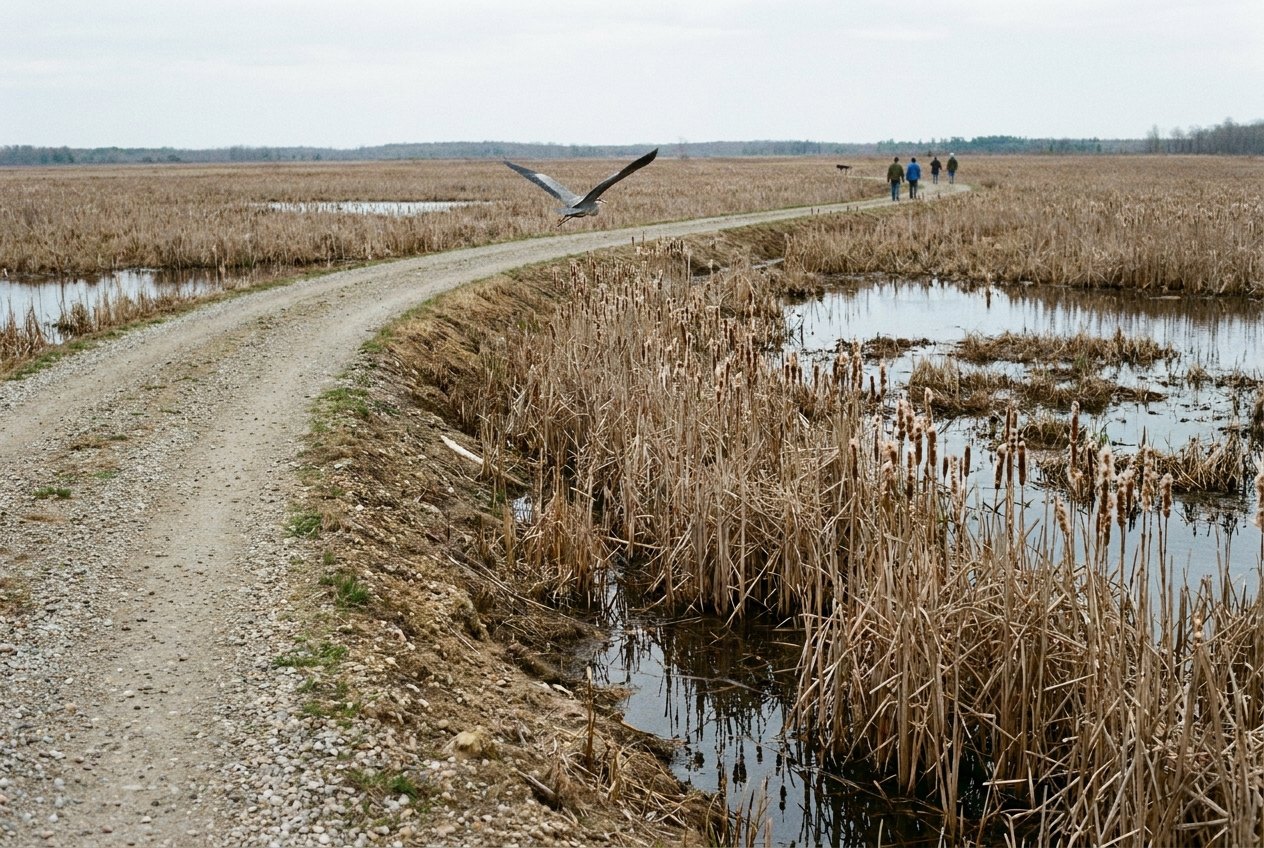
Tuttle Marsh does not announce itself. Leave Old US-23 between Oscoda and the Tawases, turn onto the gravel of Tuttle Marsh Road, and the pines open up into a flat country of reeds, standing water and long straight dikes. The wildlife area covers about 5,000 acres of the Huron National Forest, and it is the best stop on this tour for birds.
A marsh with levels you can walk
The heart of the area is an impoundment of about 380 acres, where water is held behind dikes so it stays wet enough for nesting and feeding birds. The dikes double as trails. Walk out along one and you are surrounded by water on both sides, with a clear view in every direction and nothing between you and the birds but the reeds.
Watch for ducks and geese on the open water, great blue herons stalking the edges, ospreys hovering before a dive, and bald eagles perched on dead trees. Rails are harder: small, secretive marsh birds you are more likely to hear calling from cover than to see. Early morning and evening bring the most movement.
Marshes like this one filter water, slow floods and give fish and frogs somewhere to breed, and the impoundment is managed with those jobs in mind as well as for birds. Water levels can differ from one visit to the next.
Driving the gravel road
Tuttle Marsh Road is gravel and has pull-offs where you can stop, look and walk. Drive slowly, both for the birds and for the surface, which can be rough after rain. Park fully off the roadway so others can pass. There are no facilities of any kind, so bring water and plan for the lack of toilets before you arrive.
10ALSO WORTH THE DETOUR · Tawas Bay and Tawas Point · stop 10The Au Gres Delta Nature Preserve, at the end of the roadStay on the dikes and the road. The ground beyond them is soft, often flooded, and important for nesting birds in spring and early summer. A spotting scope or good binoculars makes far more difference here than at any other stop on the tour.
Spring and autumn are the marsh's seasons
April and May bring migrating waterfowl and the first herons, and the marsh is loud with frogs. Insects arrive with the warm weather, so June and July call for repellent and long sleeves. September and October bring migrants back through and autumn colour to the surrounding forest; this is also hunting season, so wear bright colours and keep to the open dikes. In winter the marsh freezes and the road may not be cleared; check with the Forest Service first.
How long, and the next walk
Give the marsh an hour or more. Birding rewards patience, and the best sightings often come after you have stood still for ten minutes. Tuttle Marsh is the second stop on the five-walk short day, coming straight after Eagle Run.
From here, head north-west on county roads to Monument Road and the Corsair trails, about half an hour away. If you are combining the forest with the coast, the Tawas Bay tour starts a few miles south.
Every photograph here is credited, with its licence, on who took the photos.