River Road and the six Au Sable dams
A full day upriver from Oscoda: six hydro dams built between 1911 and 1924, a bronze to the lumbermen, a paddlers' overlook, a spring-fed ravine and two high views over the ponds.
- FROM OSCODA
- About 10 minutes to Foote Dam
- BEST SEASON
- Late spring through October colour
- GETTING THERE
- West from Oscoda on River Road
- BRING
- Full tank, water, walking shoes, binoculars, a printed map
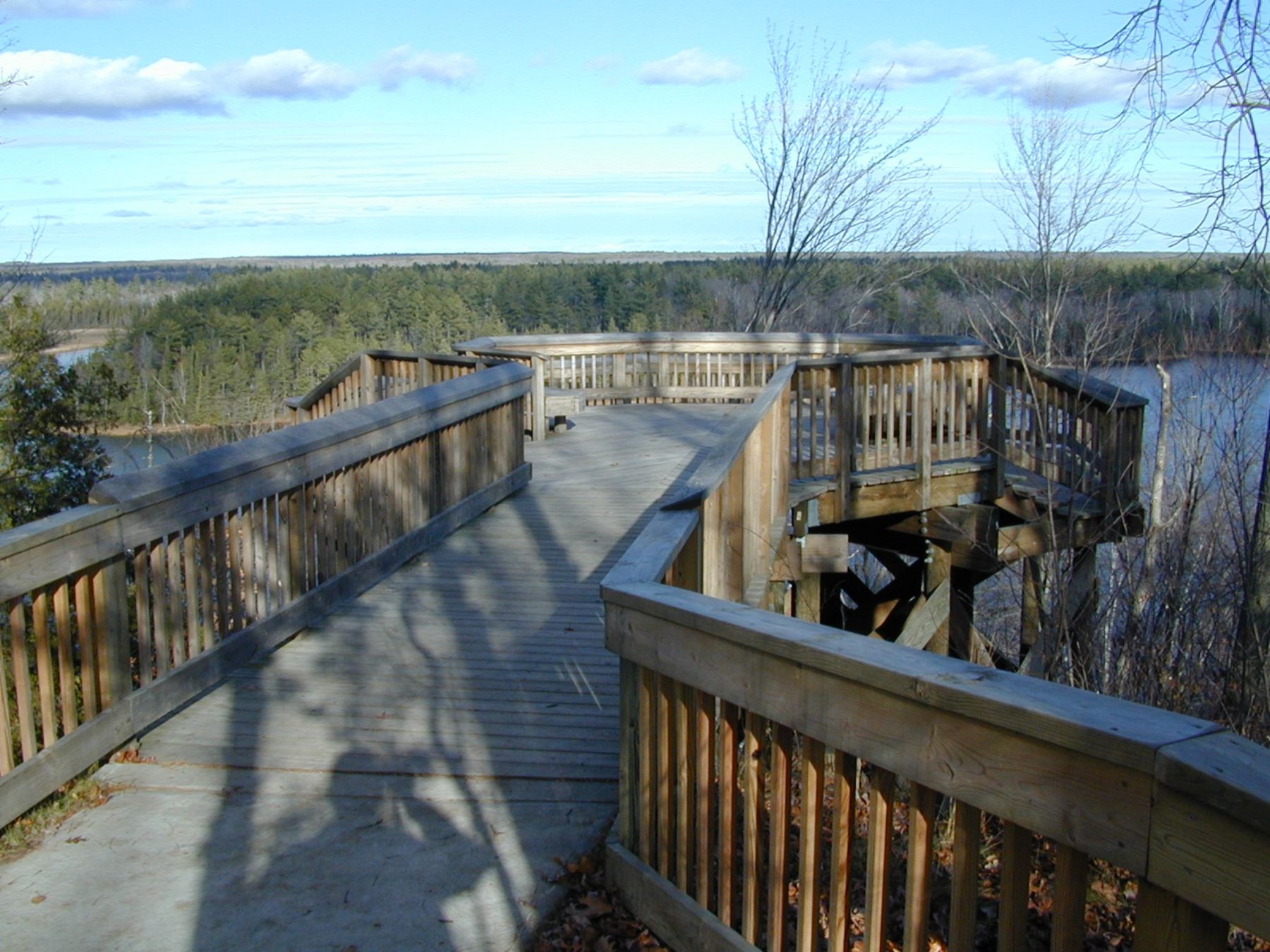
From the US-23 bridge in Oscoda, River Road leaves town along the south side of the Au Sable and climbs gently into the Huron National Forest. Within ten minutes the houses thin out and the river widens into the first of a chain of long, quiet ponds. Each pond ends at a dam, and each dam is still turning out power more than a century after it was built. This tour follows that chain upstream to Mio, stopping at all six dams and at the four places in between where the valley is best seen.
River Road was named a National Forest Scenic Byway in 1988 and a National Scenic Byway in 2005, and it earns the title in a quiet way. There are no towns on it, few signs and long stretches of red and jack pine. What it does have is a river that was harnessed early, a forest that grew back after the great lumber cut, and a string of public overlooks built to let you see both.
Why the river road is worth a whole day
The Au Sable was a logging river first. Through the late 1800s it carried pine down to the sawmills at its mouth, and when the timber ran out the valley was left as cutover sand. The next chapter came quickly. Consumers Power, the company founded by William A. Foote, began damming the river in 1911 and finished the sixth plant in 1924. The dates run like this: Cooke in 1911, Five Channels in 1912, Loud in 1913, Mio in 1916, Foote in 1918 and Alcona in 1924. Driving upstream, you meet them out of building order, which makes the story more interesting to piece together as you go.
Cooke, the first, sent its power 125 miles to Flint at a voltage that was a world record at the time. Mio, the last stop, tried a new way of passing floodwater under its powerhouse. In between, Alcona took seven years to finish because the sand would not hold still. You do not need any interest in engineering to enjoy the drive, but by the end you will read the river differently.
How the ten stops run
The order is simply the order you reach things heading west and upriver.
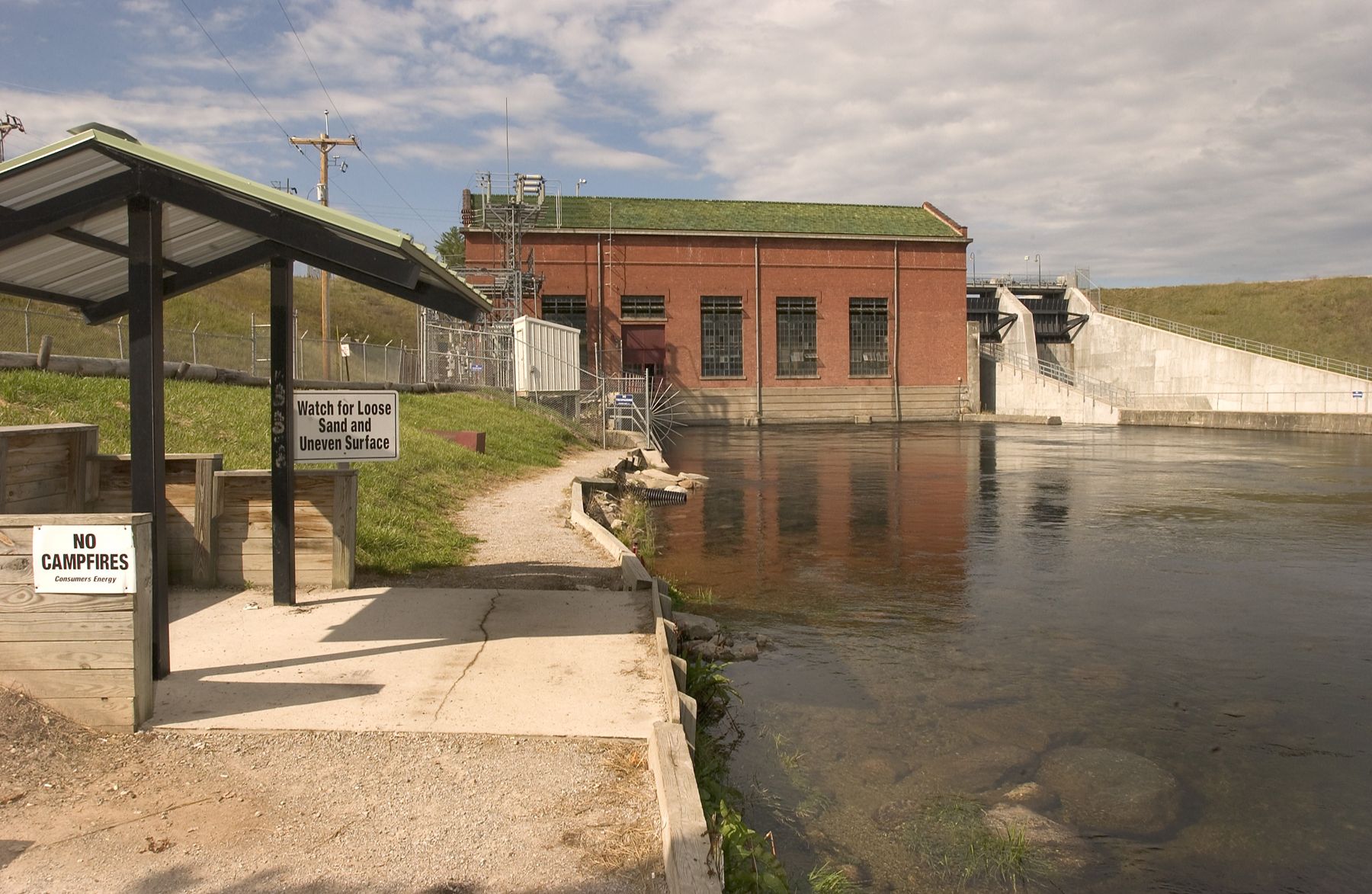
- Foote Dam, the last dam before Lake Huron, with a township park above it.
- Cooke Dam, the oldest of the six and listed on the National Register.
- The Lumberman's Monument, a bronze of three loggers on a bluff over Cooke Pond.
- Canoer's Memorial, an overlook honouring the paddlers of the Au Sable marathon.
- Iargo Springs, a long stairway down to springs at the river's edge.
- Five Channels Dam, named for a spot where the river once split five ways.
- Loud Dam, where M-65 crosses the river at the west end of the byway.
- Au Sable Vista, a deck over Alcona Pond off Bamfield Road.
- Alcona Dam, begun as Bamfield Dam and the last one finished.
- Mio Dam, the farthest upstream, on the edge of Mio.
Stops one to seven sit on or just off River Road and M-65. After Loud Dam the tour leaves the byway and works north and west on county roads through Alcona County before reaching M-72 and Mio. Some of those roads are gravel, so a printed map or a downloaded one is worth having, since phone signal comes and goes in the valley.
06ALSO WORTH THE DETOUR · Huron National Forest trails · stop 6The Highbanks Trail along the Au Sable bluffs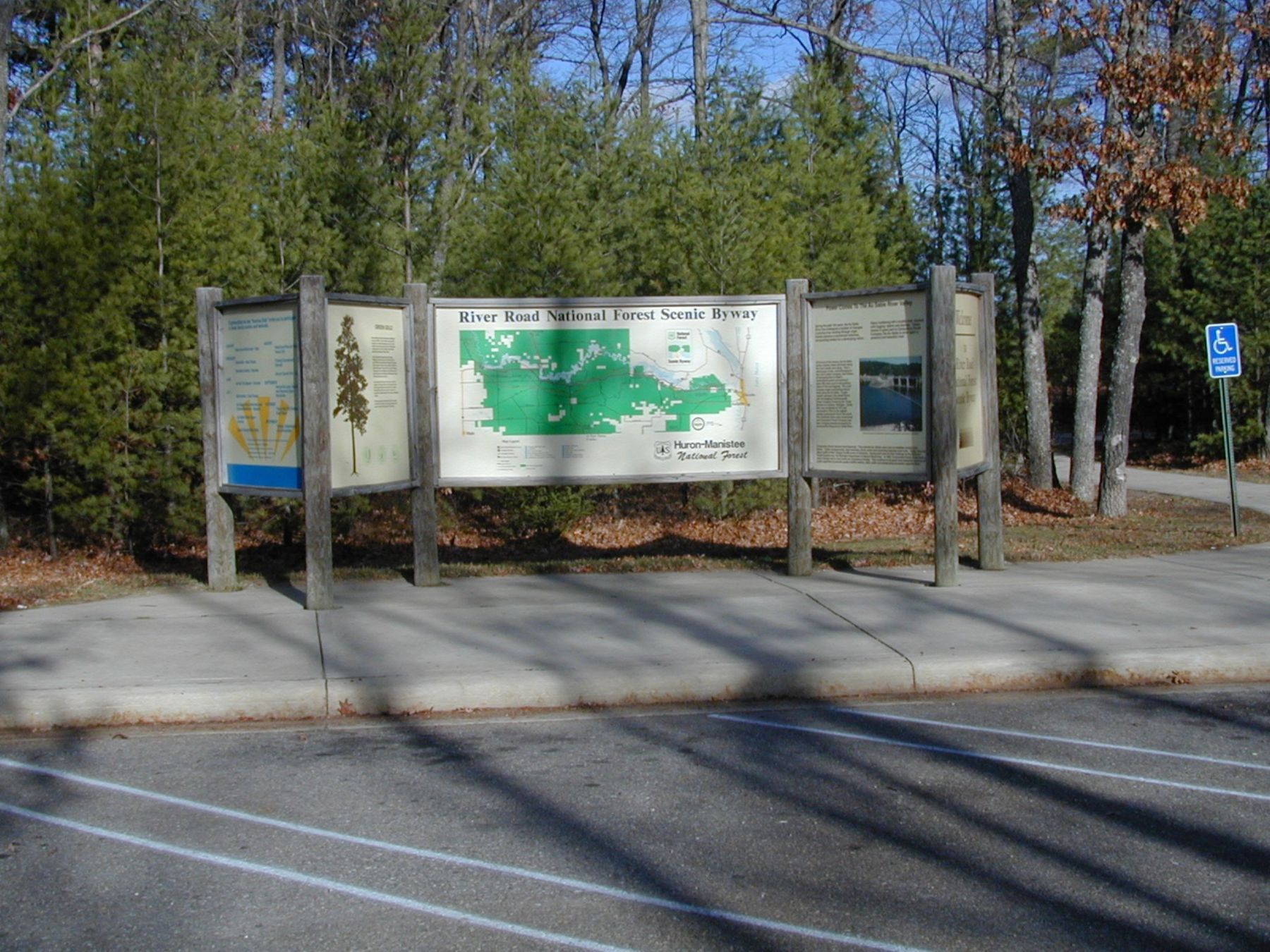
The five-stop short day
If you have only a morning or an afternoon, keep to the lower river. Foote Dam, Cooke Dam, the Lumberman's Monument, Canoer's Memorial and Iargo Springs all lie within about half an hour of Oscoda, and together they give you the best of the tour: two working dams, the monument and its visitor center, the widest view over Cooke Pond and the stairs at Iargo. Turn around at Iargo Springs and you are back in town in a little over half an hour.
The short day also suits walkers. The Highbanks Trail runs along the bluff between Iargo Springs, Canoer's Memorial and the Lumberman's Monument, so one person can drive while the others walk a section and meet the car at the next stop.
Turn around at Iargo Springs and you are back in town in a little over half an hour.
Seasons on the Au Sable
Late May through mid-October is the easy window. Summer brings paddlers, anglers below the dams and full parking at the Lumberman's Monument on warm weekends; the last full weekend of July is marathon weekend, when the river fills with racing canoes and crowds gather at the dams. Early October is the reason many people come at all, when the oaks and maples on the bluffs turn and the ponds hold the colour.
Winter is a different trip. River Road itself is a main road and stays open, and the monument grounds are open all year, but some side roads, including the one to Au Sable Vista, are not plowed. Iargo Springs may close for renovation from autumn 2026, so check with the Huron-Manistee National Forests before you plan around it. Stairs and boardwalks anywhere on the river can be icy well into spring.
Getting there and getting home
Start at the US-23 bridge in Oscoda and head west on River Road; Old Orchard Park and Foote Pond appear within a few minutes. The full ten stops take most of a day with time to walk, with most of the driving on paved roads until Loud Dam. From Mio Dam, the quickest way home is east on M-72 to US-23 at Harrisville and then south along the lake to Oscoda, a little over an hour. If you would rather see the river again, retrace the route back down M-65 and River Road instead.
Every photograph here is credited, with its licence, on who took the photos.
The ten stops
In the order you reach them.
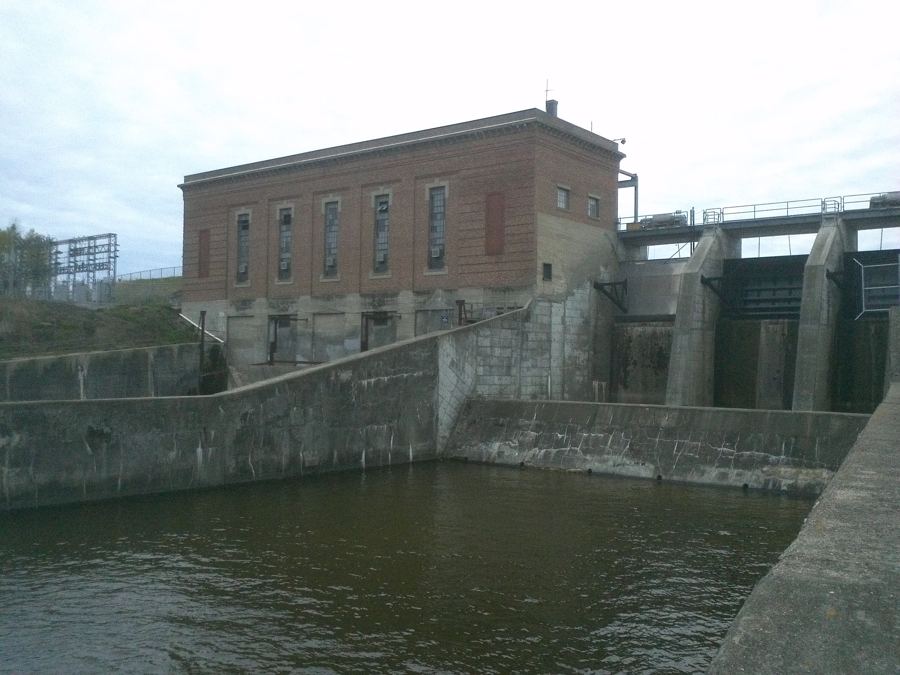
Foote Dam, the last dam before the lake
The first stop on River Road is the youngest dam on the lower river but the one closest to town, with a small township park and boat launch above it.
In the short day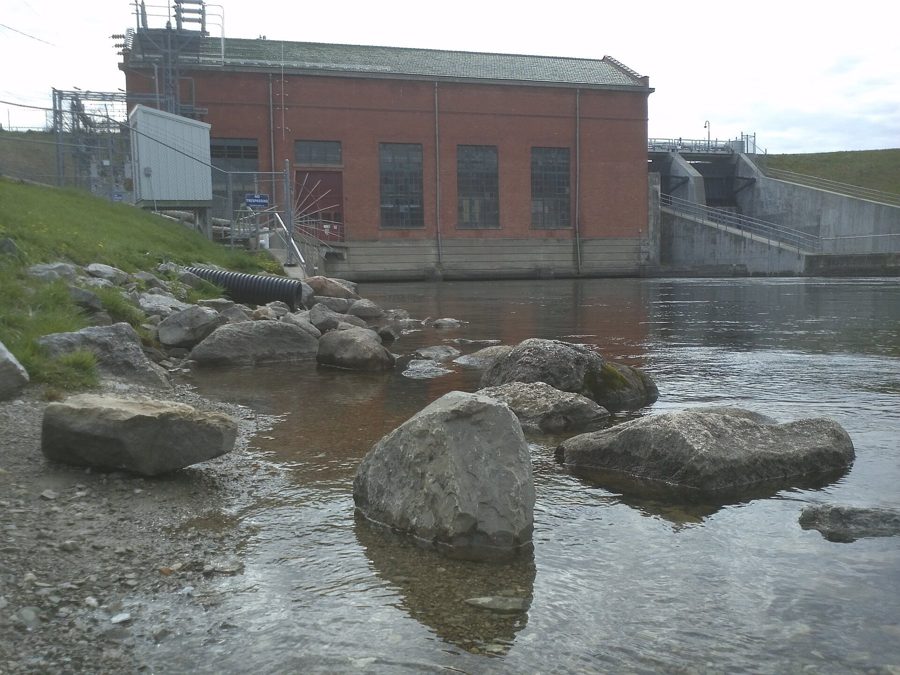
Cooke Dam, where the Au Sable hydro story began
The first of the six Au Sable plants is still running on the equipment it started with, and its red-brick powerhouse is listed on the National Register of Historic Places.
In the short day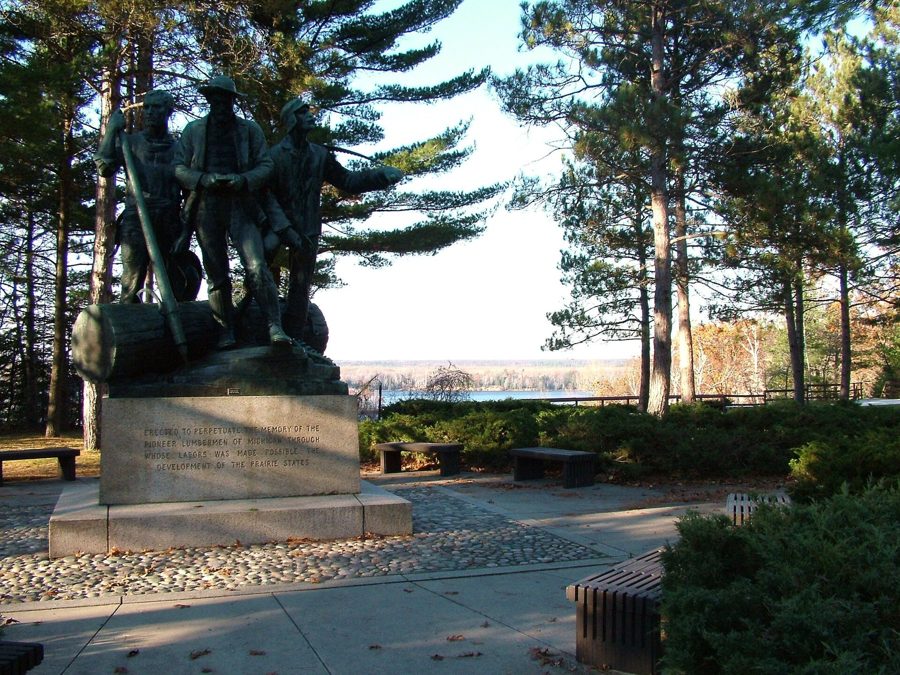
Lumberman's Monument above Cooke Pond
Three bronze loggers stand on a pine bluff above the Au Sable, a memorial to the men who cut Michigan's forests, with a wide view over Cooke Dam Pond behind them.
In the short day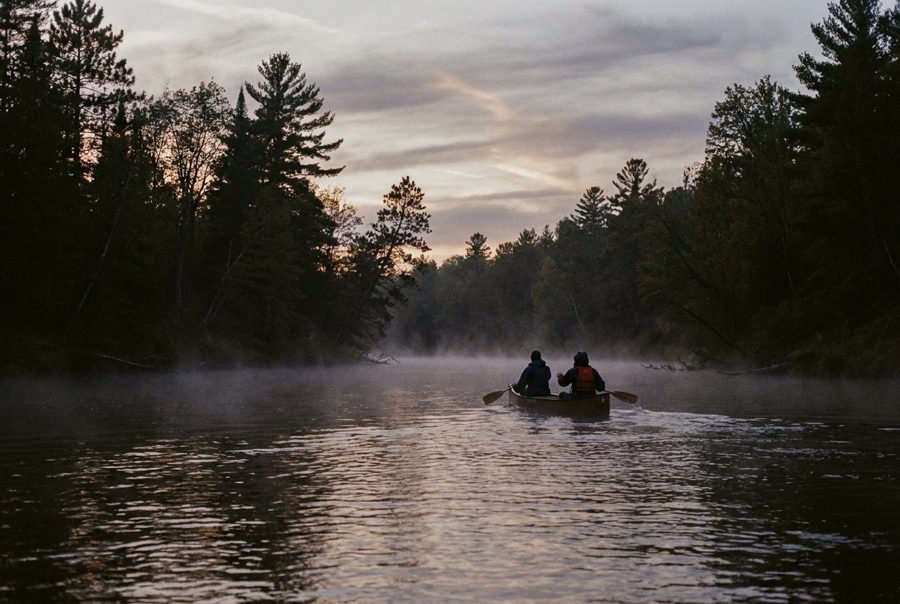
Canoer's Memorial and the marathon
A roadside overlook above Cooke Dam Pond honours the racers of a canoe marathon that has run from Grayling to Oscoda since 1947, one of the hardest races of its kind.
In the short day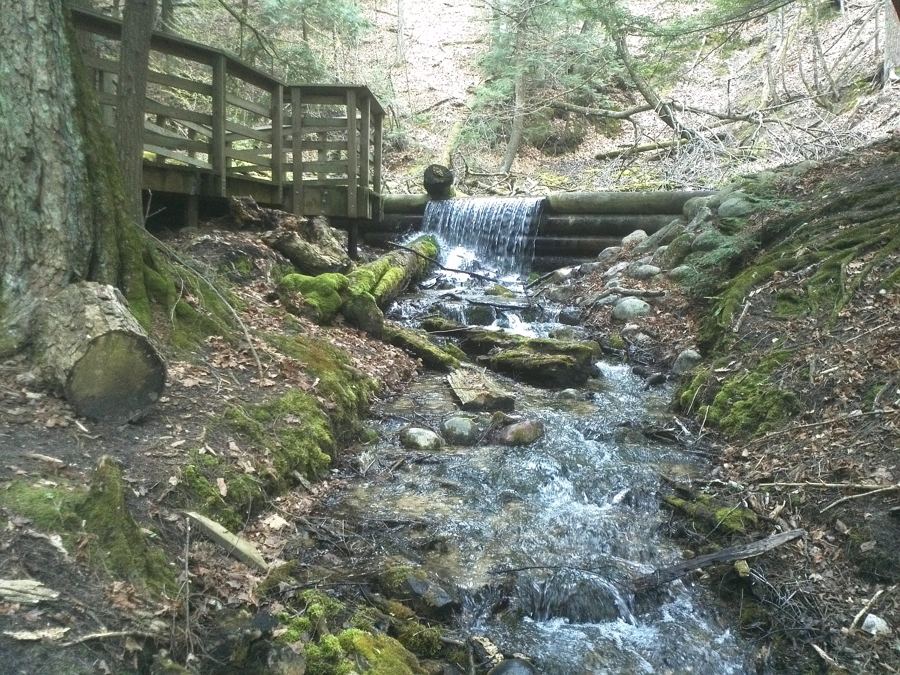
Iargo Springs and the long stairs
A long stairway drops from River Road to cold springs at the foot of a bluff, where boardwalks run beside the water. It is the turning point of the short day.
In the short day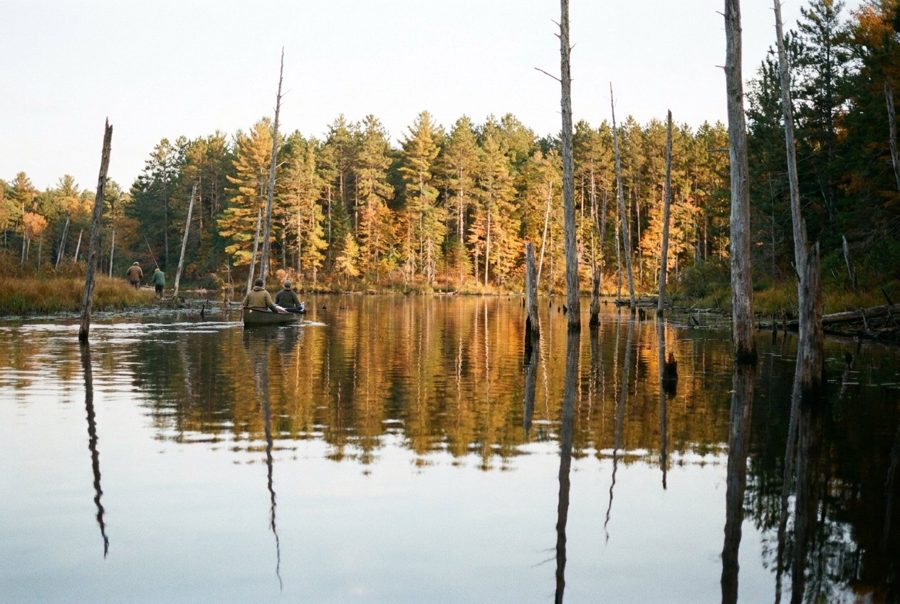
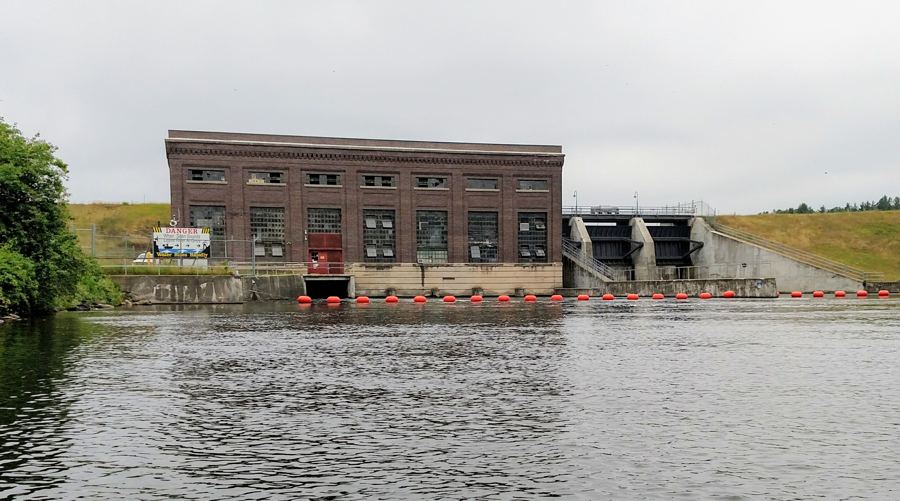
Five Channels Dam
The second dam on the Au Sable takes its name from a braid of river that disappeared under its pond, and the ground around it is a listed archeological district.
Loud Dam on M-65
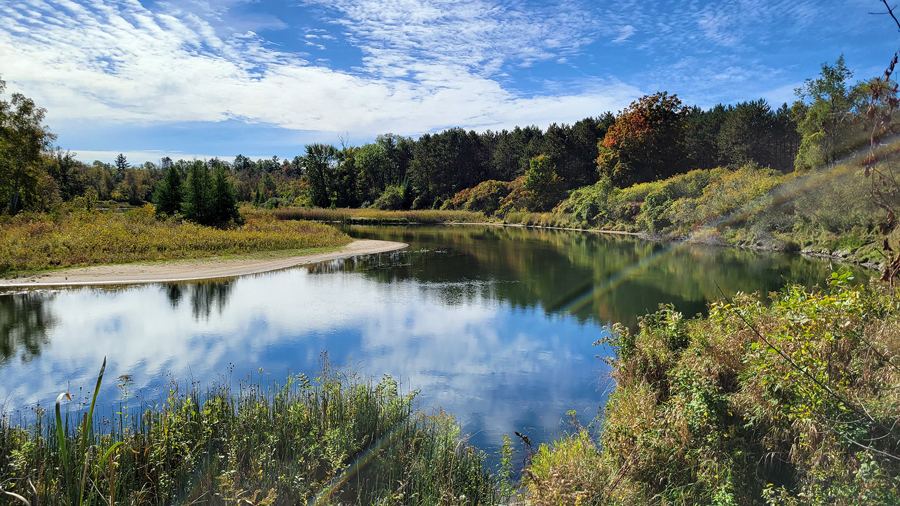
The third dam built on the Au Sable sits where the state highway crosses the river, named for a lumber family that once owned much of the logged-over valley.
Au Sable Vista over Alcona Pond
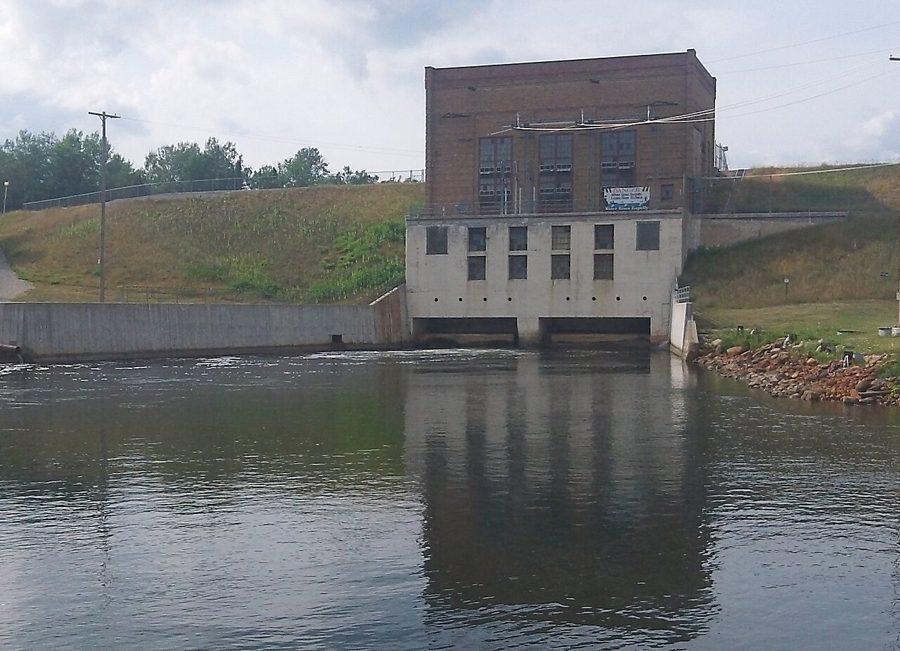
A simple observation deck in Alcona County looks down on one of the most photographed views of the Au Sable, with forest rolling away on every side of the pond.
Alcona Dam, the last one built
The fifth dam upstream took seven years to finish, held up by shifting sand and the First World War, and it was renamed for the county along the way.
Mio Dam, the farthest upstream
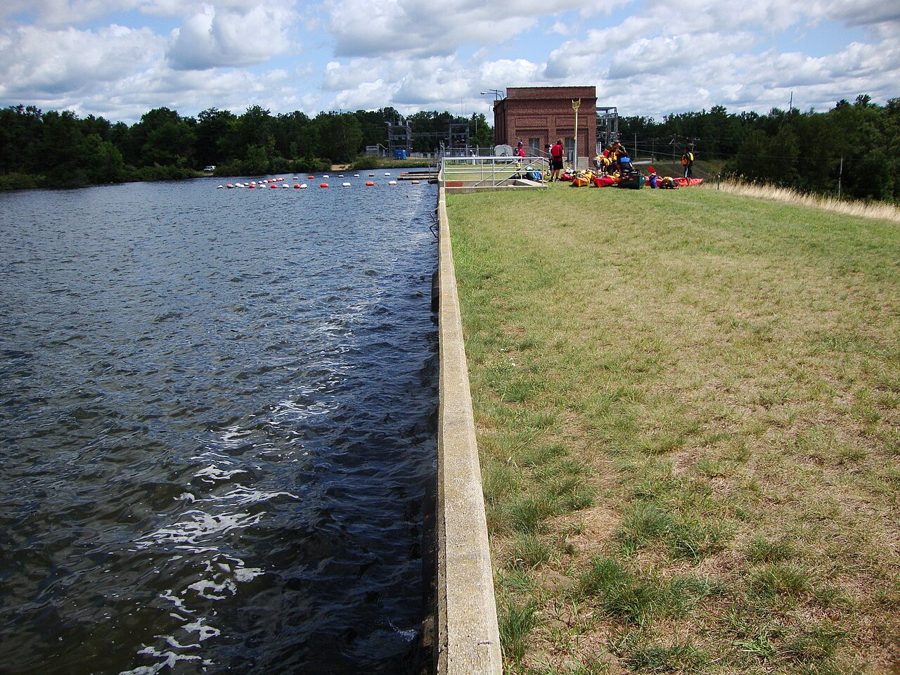
The tour ends at the top of the chain, a 1916 plant on the edge of Mio whose engineers tried something new with floodwater, and which stands in the Hydro Hall of Fame.