Cooke Dam, where the Au Sable hydro story began
The first of the six Au Sable plants is still running on the equipment it started with, and its red-brick powerhouse is listed on the National Register of Historic Places.
- ALLOW
- About 30 minutes
- FROM OSCODA
- About 20 minutes west
- PARK OR STAND
- The public lot beside the powerhouse and tailwater fishing area
- NEXT LEG
- A few miles west to Monument Road and the monument
- BEST MONTHS
- May to October
- BRING
- Camera, sturdy shoes, fishing licence for the tailwater
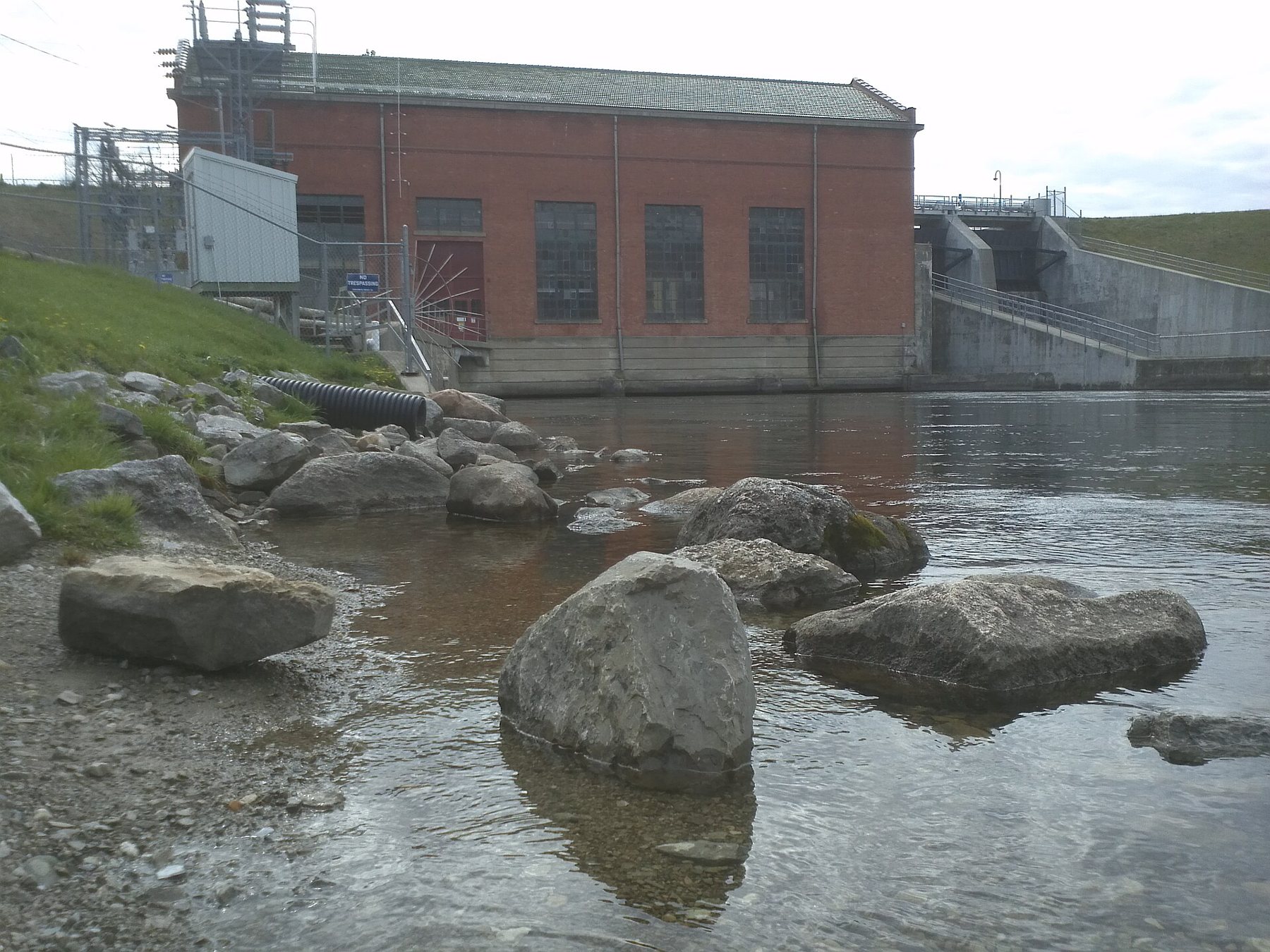
The red-brick powerhouse at Cooke Dam looks like a building from another age, and it is. When the turbines here began turning in December 1911, nothing else had yet been built on the Au Sable. Every dam you see on the rest of this tour came after this one, and the equipment that started it all is still in use inside.
A record set in 1911
Cooke was the first of the six Au Sable plants. Its power did not stay local: it was sent 125 miles to Flint over a line carrying 140,000 volts, a world record for transmission at the time. That long line was the point of the whole venture. Showing that electricity from a remote northern river could reach a growing industrial city opened the way for the dams that followed at Five Channels in 1912, Loud in 1913 and on up the valley.
The dam is named for Andrew Cooke, a banker who helped finance the project. It was listed on the National Register of Historic Places in 1996, and the original generating equipment still works, which makes this one of the more remarkable working buildings in northern Michigan.
Where to stand at Cooke
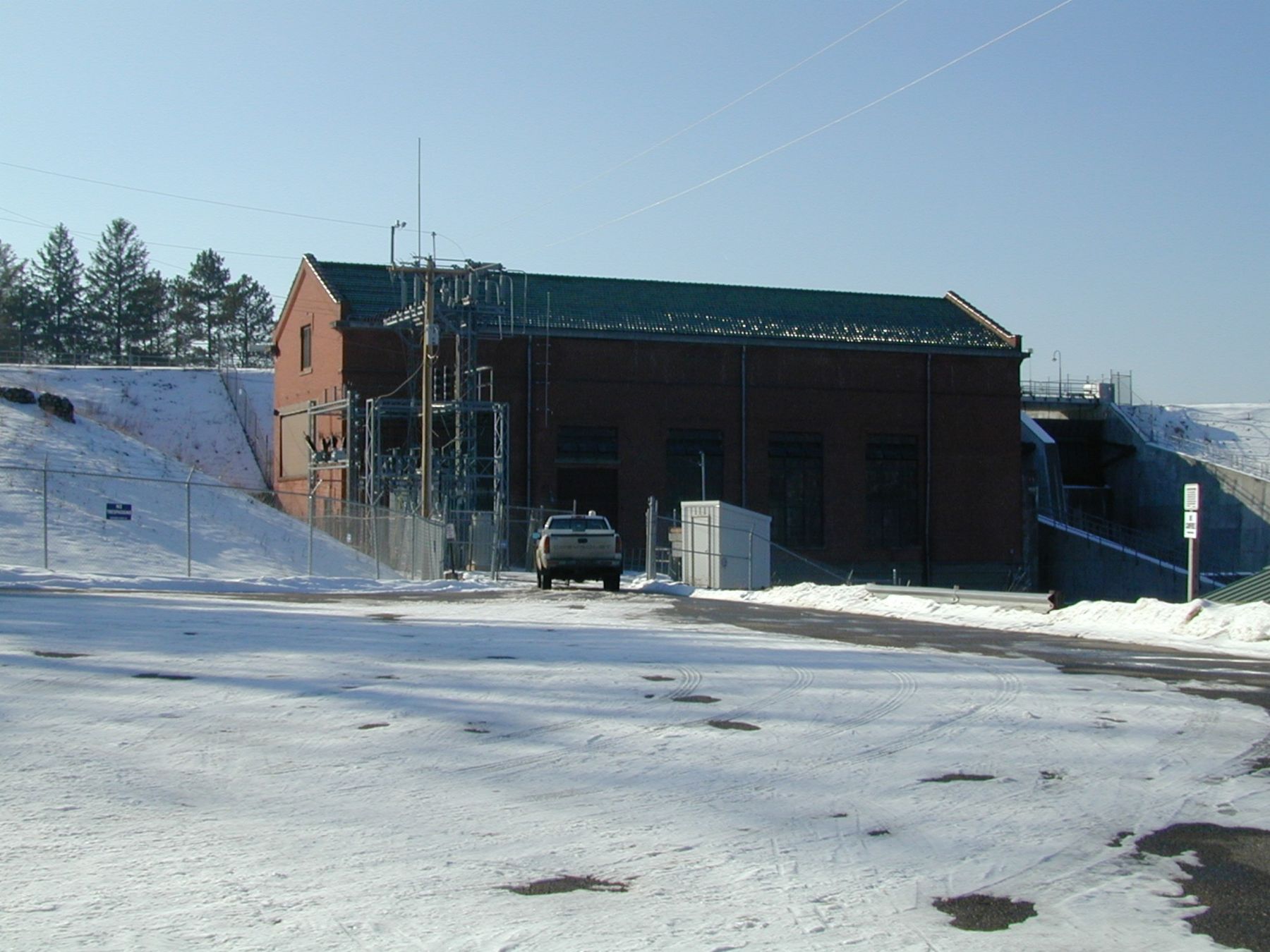
A public area beside the powerhouse lets you walk down to the tailwater, where the river leaves the dam. From the path you see the powerhouse, the spillway to its right and the clear, quick water below, often with anglers working the current. Stay on the marked paths and respect the fences; this is a working plant, and conditions near the water can change without warning.
Above the dam spreads Cooke Dam Pond, the long, wide impoundment that the next three stops look down on from the bluffs. Seeing the dam first makes those views make sense.
03ALSO WORTH THE DETOUR · River Road and the six Au Sable dams · stop 3Lumberman's Monument above Cooke PondTime, seasons and the short day
Allow about half an hour, more if you fish. The tailwater area is pleasant from late spring into October, and the brick and the turning trees make a fine pairing in early autumn. In winter the powerhouse stands out against the snow, but paths can be slick, so go carefully. Cooke Dam is one of the five stops in the short day, and arguably the one with the most history.
If you are coming straight from Foote Dam, you have now seen the youngest and the oldest of the lower river's dams within a quarter of an hour of each other.
Up to the bluff
The next stop, the Lumberman's Monument, is only a few miles farther west, on a bluff above Cooke Pond. Follow River Road west to Monument Road. The drive takes you from the age of power back to the age of pine that came before it, and it is a good order in which to see the two. The rest of the River Road and dams tour continues upstream from there.
Every photograph here is credited, with its licence, on who took the photos.