The Mack Lake burn and the warbler that came back
South of Mio, the jack pine plains carry the story of a 1980 fire that went wrong, and of the rare songbird that later found its best nesting ground in the forest that regrew.
- ALLOW
- About 30 to 45 minutes
- FROM OSCODA
- About 1 hour 10 minutes west
- PARK OR STAND
- Pull fully off on wide forest road shoulders; no signed lot
- NEXT LEG
- A short drive on forest roads to the walk
- BEST MONTHS
- Late May to early July
- BRING
- Binoculars, insect repellent, water, printed forest map
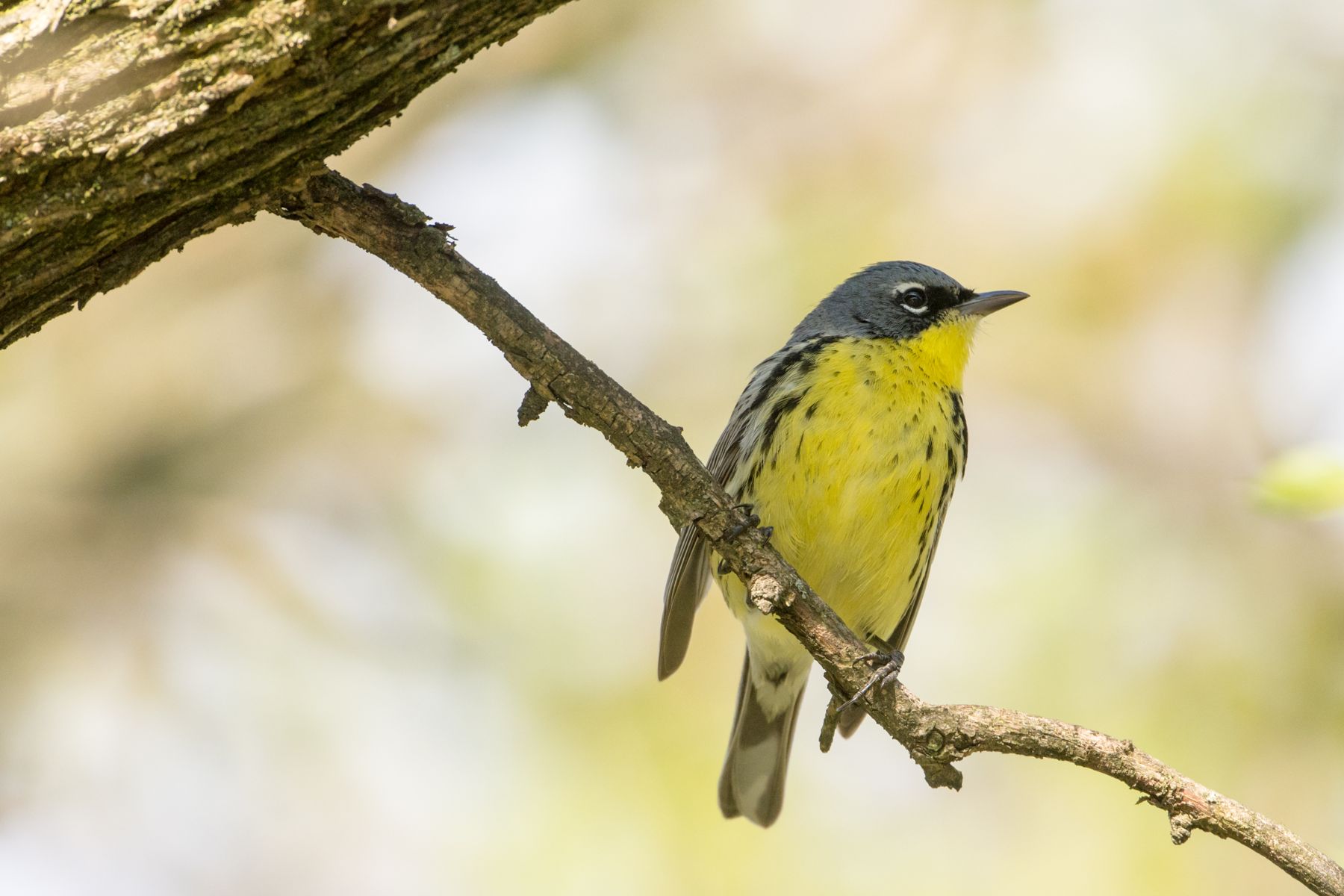
The ninth stop is not a single spot but a stretch of country. South of Mio, sandy plains of jack pine run for miles, broken by forest roads and the occasional open patch. It looks quiet and ordinary. It is also the setting for one of the hardest days in the Huron National Forest's history, and for one of Michigan's best-known conservation recoveries.
What happened on May 5, 1980
On May 5, 1980, Forest Service crews lit a prescribed burn near Mio. The aim was to create new habitat for the Kirtland's warbler, which needs young jack pine, and fire is how jack pine forests have always renewed themselves. That afternoon, in dry, windy weather, the burn escaped.
The Mack Lake fire, as it became known, burned about 25,000 acres before it was stopped. It destroyed 44 homes and killed a Forest Service worker. It remains a sober reminder of how fast fire can move through dry jack pine in spring wind.
Why a rare bird needs young pine
The Kirtland's warbler is a small songbird, grey above and yellow below, that winters in the Bahamas and nests mostly in northern Michigan. It builds its nest on the ground under young jack pine, in stands that are only a few years to a couple of decades old. Once the trees grow tall and the lower branches die off, the birds move on.
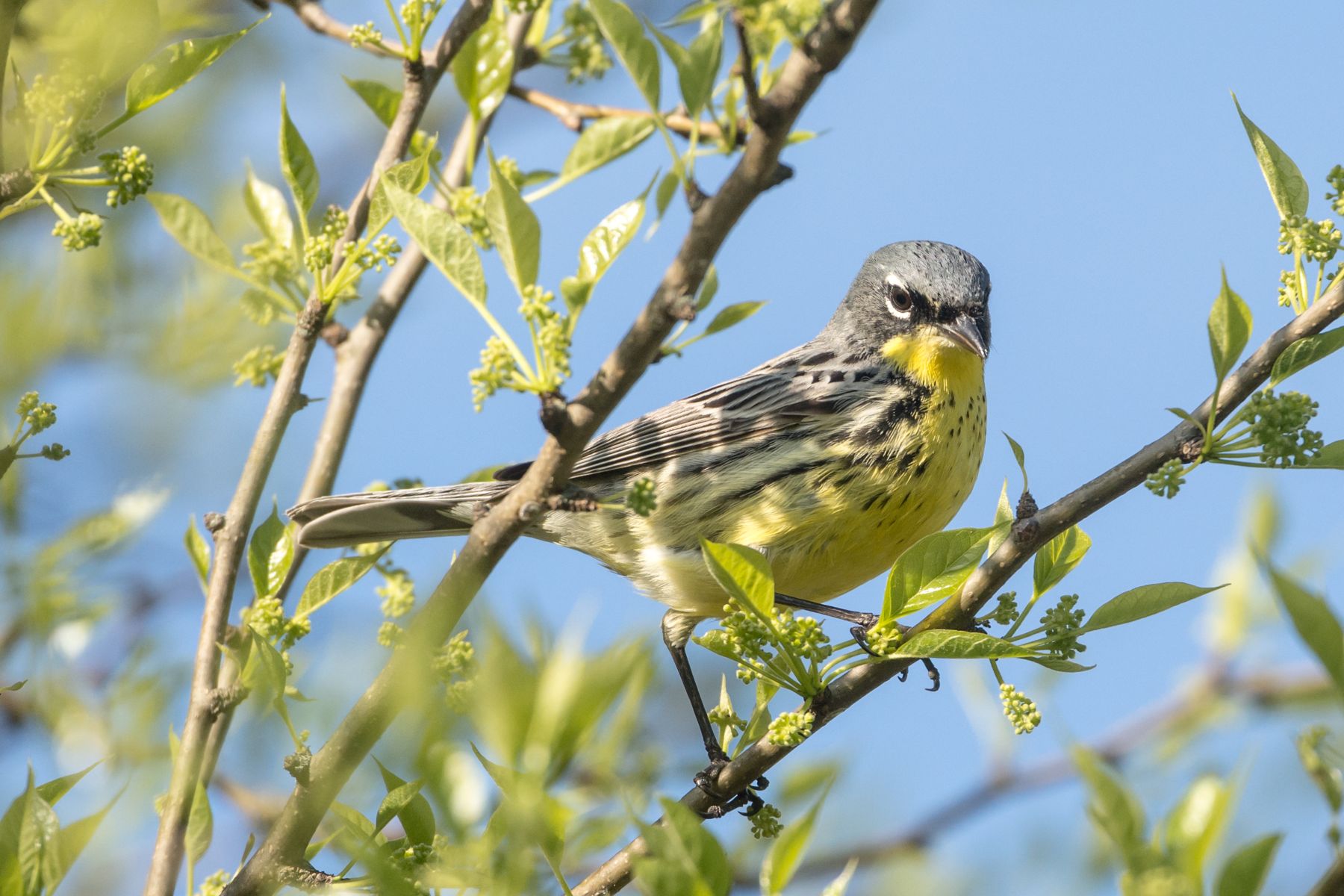
Jack pine cones are sealed with resin and often open only in heat, so in nature it took fire to start a new forest. The pine that came back after the Mack Lake fire grew into exactly the kind of young stand the warbler needs, and for years it was the bird's main nesting ground. Today the habitat is managed on purpose, with blocks of jack pine cut and replanted in turn, and the species came off the federal endangered list in 2019.
03ALSO WORTH THE DETOUR · Huron National Forest trails · stop 3Tuttle Marsh, a wetland worked for wildlifeSeeing the pine plains without a single pull-off
There is no signed public pull-off for the burn, so treat this as a drive through the country rather than a stop at one place. Follow the forest roads south of Mio, pull fully off where the shoulder is wide, and look across the young and middle-aged pine. Warbler nesting areas are closed to entry during the nesting season; watch for signs, stay on the roads and keep your distance.
Give it thirty to forty-five minutes. Late May through early July is when the males sing; on a still morning you may hear them from the road. In other seasons the plains are quiet, and some forest roads are soft sand in summer and unplowed in winter.
The Mack Lake burn is not part of the short day.
On toward the grouse trail
You arrive from McMasters Bridge, the far end of the tour. A short drive on forest roads takes you to the last stop, Ruffed Grouse Walk. The whole route is on the Mio and upper river tour page.
Every photograph here is credited, with its licence, on who took the photos.