The museum of the men who replanted Michigan
South of Grayling, on the grounds of a nursery that once grew seedlings by the millions, a state museum tells how the Civilian Conservation Corps put trees back on the cutover north.
- ALLOW
- About an hour
- FROM OSCODA
- About 1 hour 50 minutes west
- PARK OR STAND
- The museum parking area at the old nursery grounds
- NEXT LEG
- A short drive to the beach side of the park
- BEST MONTHS
- Late May to early September
- BRING
- Walking shoes, a camera, water
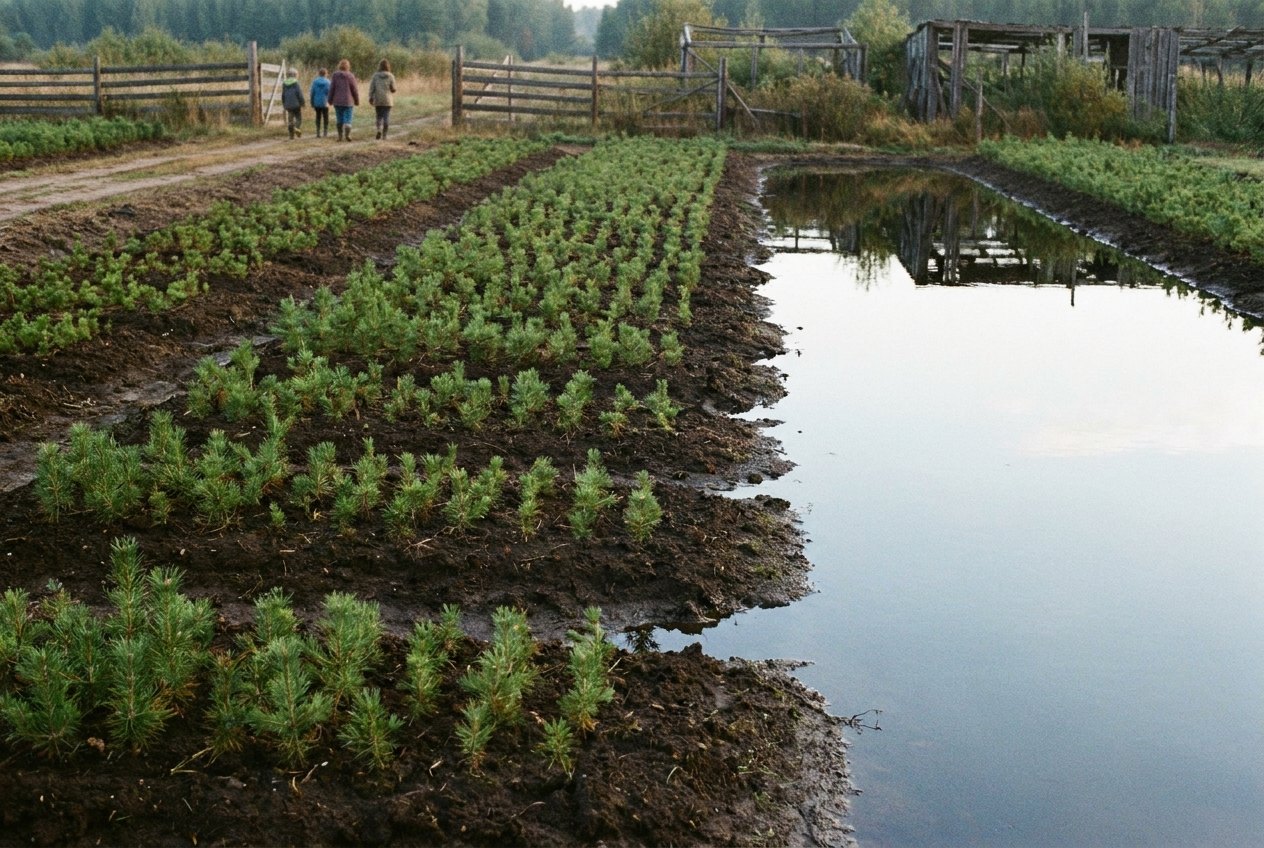
By the early 1900s the northern Lower Peninsula had been logged almost bare. Fires ran across the stump fields, and much of the land was abandoned. The ninth stop tells how the forest came back, on the very ground where many of the new trees were grown.
A nursery that grew forests
The Higgins Lake Nursery was begun in 1903, one of the state's first efforts to replant the cutover land. It grew into one of the largest seedling nurseries in the world, raising young pines in long beds and shipping them out by the million to be planted across the north. When you drive through the forests on the way here from Oscoda, many of the trees you pass came from nurseries like this one.
The young men of the Corps
In 1933, during the Depression, the federal government created the Civilian Conservation Corps, which gave work to young men on public land. A CCC camp was set up at the nursery that year. Across Michigan, from 1933 to 1942, the Corps planted 484 million trees, fought forest fires, built roads, bridges and park buildings, and stocked streams with fish. Several of the stops on this tour show their work, including the camp buildings at the Hartwick Pines Logging Museum.
05ALSO WORTH THE DETOUR · Huron National Forest trails · stop 5Kiwanis Monument and the replanted pineThe museum tells their story through the things they used and the pictures they left: the barracks life, the tools, the uniforms and the camps spread across the state. It is a state museum, and it presents the Corps with clear respect for what those young men achieved.
Seeing the grounds
Allow about an hour. Besides the exhibits, the grounds themselves are part of the visit. Walk around the old nursery site and you can still pick out the layout of a place built to grow trees on a huge scale, with planted pine grown up nearby. A short walk is enough to get a sense of it. Where pines stand in straight, even rows, you are looking at planted forest; it is the clearest sign of human hands on the land you will see all day. The exhibits also show the kind of tools the crews carried into the field.
A seasonal museum
The museum keeps seasonal hours and is generally open in the warmer months. Days and times change, so check before you go, and be ready to see only the grounds if you arrive out of season. Summer is the surest time. Spring and autumn visits can still be worthwhile for the grounds alone, and the drive down from Grayling passes through some of the forest the nursery helped to grow.
The CCC museum is not part of the five-stop short day. On the full tour it follows Hanson Hills, and the last stop, North Higgins Lake State Park, is a short drive away on the lakeshore. The Grayling tour page lists the whole route.
Every photograph here is credited, with its licence, on who took the photos.