A logging camp beside the trees it would have cut
Along the Old Growth Forest Trail at Hartwick Pines, two log buildings put up by the Civilian Conservation Corps recreate the camps where Michigan's pine loggers lived and worked.
- ALLOW
- About 45 minutes
- FROM OSCODA
- About 1 hour 45 minutes west
- PARK OR STAND
- The visitor center lot, then walk the trail
- NEXT LEG
- About ten miles back through Grayling to Hanson Hills
- BEST MONTHS
- Late May to early October
- BRING
- Walking shoes, a light jacket, a camera
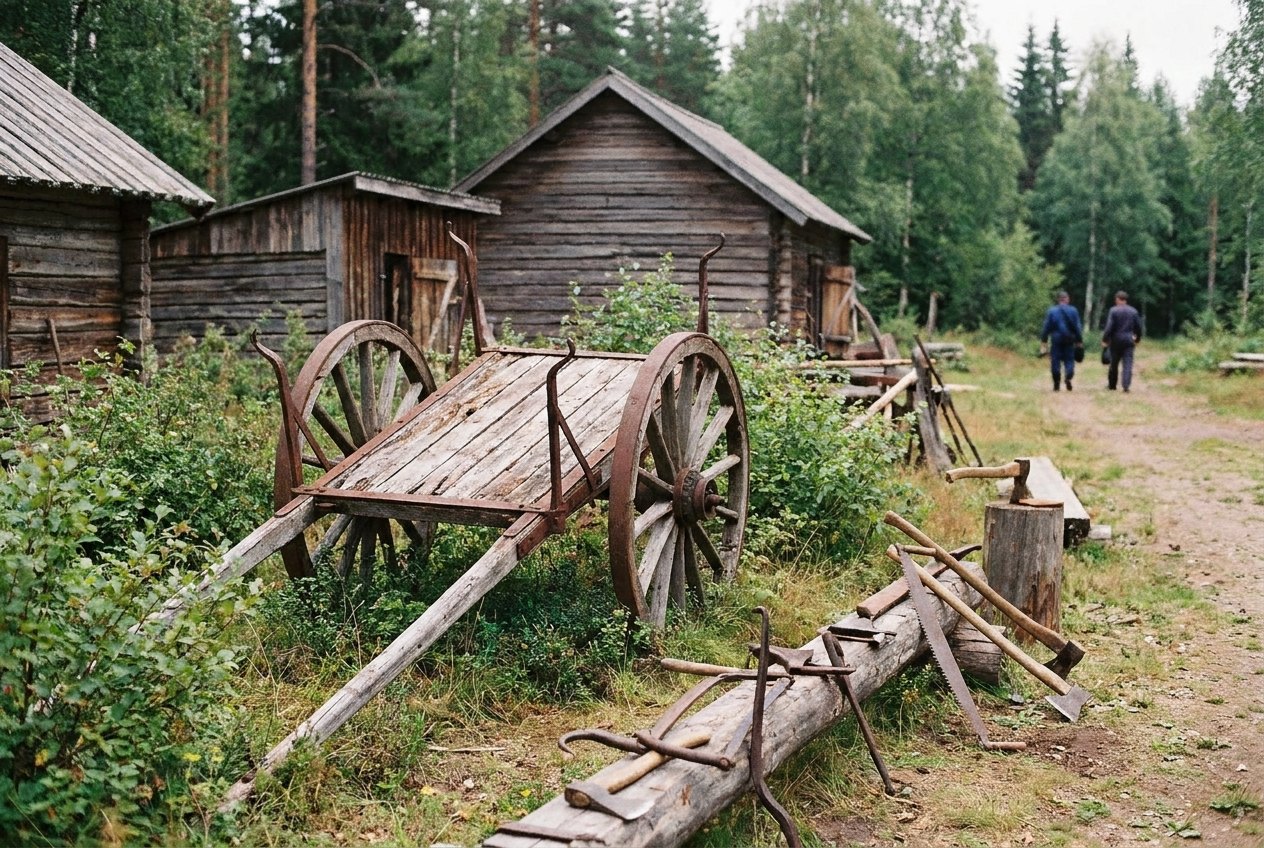
There is a pointed irony in the setting of the seventh stop. A few minutes' walk from some of the last old white pines in the state stand the buildings of a logging camp, the kind of place from which crews went out to cut forests exactly like this one. The Hartwick Pines Logging Museum lets you see both halves of the story in a single walk.
Camp buildings raised by the CCC
The two main buildings are replicas of logging-camp structures, put up in 1934 and 1935 by the Civilian Conservation Corps, the Depression-era program that put young men to work on public land. Built of logs, they follow the plan of the camps that housed crews through the logging boom. The museum is administered by the Michigan History Center.
Inside, the buildings show how the crews slept, ate and passed the long winter evenings, along with the tools of the trade. Outside, larger pieces of equipment are set out along the paths.
How a winter camp worked
Michigan's pine was cut mostly in winter. Crews felled the trees and hauled the logs on sleighs over iced roads to the banks of rivers such as the Au Sable. In spring, when the snow melted and the rivers rose, the logs were floated downstream to the sawmills, many of them in towns on the Lake Huron shore. The camps themselves were rough and crowded, the work long and dangerous, and the food plentiful because the men needed it.
06ALSO WORTH THE DETOUR · Alpena and Thunder Bay · stop 6The Besser Museum for Northeast MichiganStanding in the bunkhouse after walking under the old pines, you can picture how quickly a crew could clear a stand of forest, and why so little of it was left.
Steam days in summer
At special summer events, a steam-powered sawmill on the grounds is run, giving you the noise, smoke and smell of a working mill. Event days vary from year to year, so check the current calendar if you want to see it in action. The rest of the time the equipment sits quietly beside the path, and you can look as long as you like. The larger pieces of equipment show how much muscle, animal and human, the work took before machines took over.
Pairing it with the pines
Give the museum about 45 minutes. It sits along the Old Growth Forest Trail, so most visitors see it in the middle of their walk through the grove. The buildings are open in the warmer months; check ahead for current days and hours. In winter the trail may still be open for walking or skiing, but the camp buildings are usually closed.
The logging museum is the fourth stop of the five-stop short day. From here the tour drives back south through Grayling to Hanson Hills, on the west side of town. The Grayling tour page has the full route.
Every photograph here is credited, with its licence, on who took the photos.