Harrisville's small downtown
A city of a few blocks: Harrisville grew from a sawmill, took a lumberman's family name, became a city in 1905 and still counts its people in the hundreds.
- ALLOW
- About 30 to 45 minutes
- FROM OSCODA
- About 30 minutes north
- PARK OR STAND
- Street parking downtown, or leave the car at the harbor
- NEXT LEG
- About 4 miles north on US-23 to Sturgeon Point
- BEST MONTHS
- June through October
- BRING
- Comfortable shoes, curiosity, small bag for errands
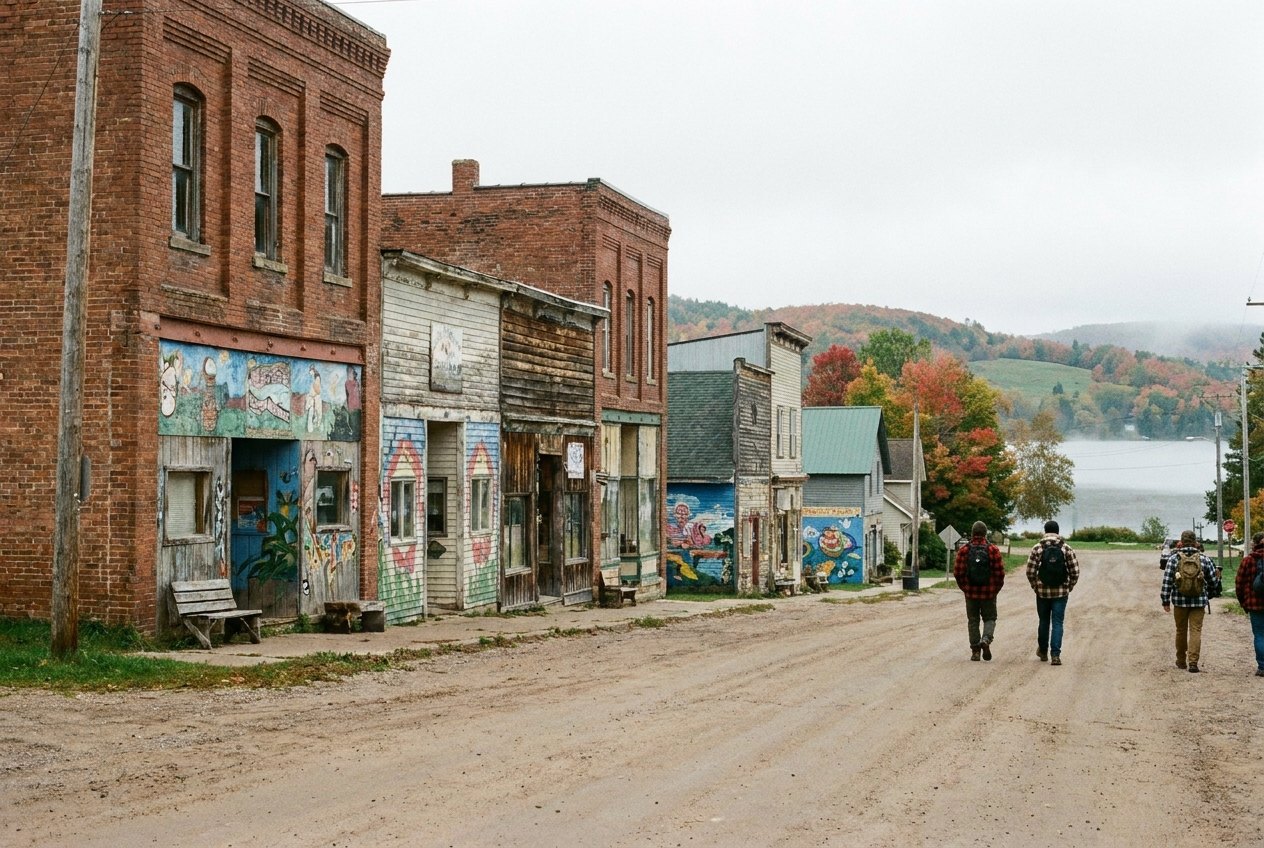
Harrisville is a city in name and a village in size. In the 2020 census it had 437 residents, putting it among the smallest cities in Michigan. Yet it is the county seat of Alcona County, and its few blocks between US-23 and the lake hold the story of how this whole stretch of shore grew up. The fourth stop is a walk, not a sight: half an hour on foot through an old lumber town.
Davison's Mill to county seat
The town started as a sawmill on Mill Creek. It was known as Davison's Mill in 1854, when lumbering on the Alcona shore was just getting under way. Benjamin Harris and his sons bought the business out, and when a post office opened in 1857 it took the name Harrisville. The family's mill turned pine into lumber that went out by water, and the settlement around it grew with the trade.
Harrisville became a village in 1887 and a city in 1905. Three years later came a scare. In October 1908, the forest fires that destroyed the town of Metz, farther north, swept across much of northeast Michigan, and Harrisville narrowly escaped. Other towns on this coast were less lucky; Oscoda burned in 1911, and the corner of it that survived is a stop on the Oscoda tour at Piety Hill.
Reading the town on foot
Walking is the right pace here. Start at the harbor, where Mill Creek meets the lake, and climb the short streets toward US-23. Look for the older buildings mixed in with newer ones, the churches, and the houses on the side streets that date from the lumber years. The town grid is compact, and you will cover most of it in half an hour.
Harrisville is also where the tour's practical needs are met. It is the only place on the route with a real downtown, so it is the natural stop for supplies, fuel and a break before the quieter roads north. The county's offices are here too, a reminder that this small place still runs a county.
05ALSO WORTH THE DETOUR · Mio and the upper river · stop 5Mio's courthouse square, after the old courthouseWhen to walk it and for how long
Allow thirty to forty-five minutes. Park on the street downtown, or leave the car at the harbor and walk up. Summer is the liveliest season, with boats in the harbor and evening concerts at the pavilion by the water. Autumn is quieter and often clearer, with the maples on the side streets turning. In winter the town is calm and the lake wind cuts through the streets, so dress for it.
This is the fourth of the five stops in the short day. With the state park and the harbor just a short walk or drive away, the three Harrisville stops make a natural cluster, and you can see all of them in a couple of hours.
North to the point
From downtown, head north on US-23 for about four miles and watch for the turn toward the lake for Sturgeon Point. A short road leads out to Sturgeon Point Lighthouse, the last stop of the short day and the most visited place on the tour. If you came up from the harbor, you have now seen what Harrisville Harbor and the town grew from: one creek and one mill.
Every photograph here is credited, with its licence, on who took the photos.