The Great Lakes Maritime Heritage Center
On the bank of the Thunder Bay River, the sanctuary's headquarters and visitor center explains the shipwrecks lying in 4,300 square miles of Lake Huron without asking you to get wet.
- ALLOW
- About 1 to 2 hours
- FROM OSCODA
- About 1 hour 10 minutes
- PARK OR STAND
- Park at the center's own lot beside the river
- NEXT LEG
- About a mile and a half upriver to Island Park
- BEST MONTHS
- Any season; check opening days
- BRING
- Time to read, and curiosity
Out in Lake Huron, beyond the breakwater at the river mouth, lie the remains of more than a century of shipping. You cannot see them from shore. The Great Lakes Maritime Heritage Center exists to close that gap: it is the headquarters and visitor center of Thunder Bay National Marine Sanctuary, and the place on this tour where the lake's hidden history is laid out in front of you.
Headquarters for a sanctuary under the lake
Thunder Bay National Marine Sanctuary was designated in 2000, the first national marine sanctuary on the Great Lakes. In 2014 it was expanded to about 4,300 square miles of Lake Huron, and it protects an estimated 116 historic shipwrecks. The sanctuary is run by NOAA, the federal agency for the oceans and atmosphere, together with the State of Michigan.
Why so many wrecks here? This part of Lake Huron sat on a busy route between the lower lakes and the Straits of Mackinac, and the coast around Thunder Bay has shoals, islands and sudden storms. Ships carrying lumber, grain, coal and stone came to grief over many decades. Cold, fresh water preserves wood and iron far better than salt water does, so many of the wrecks remain remarkably intact, which is what makes them worth protecting.
What the building holds
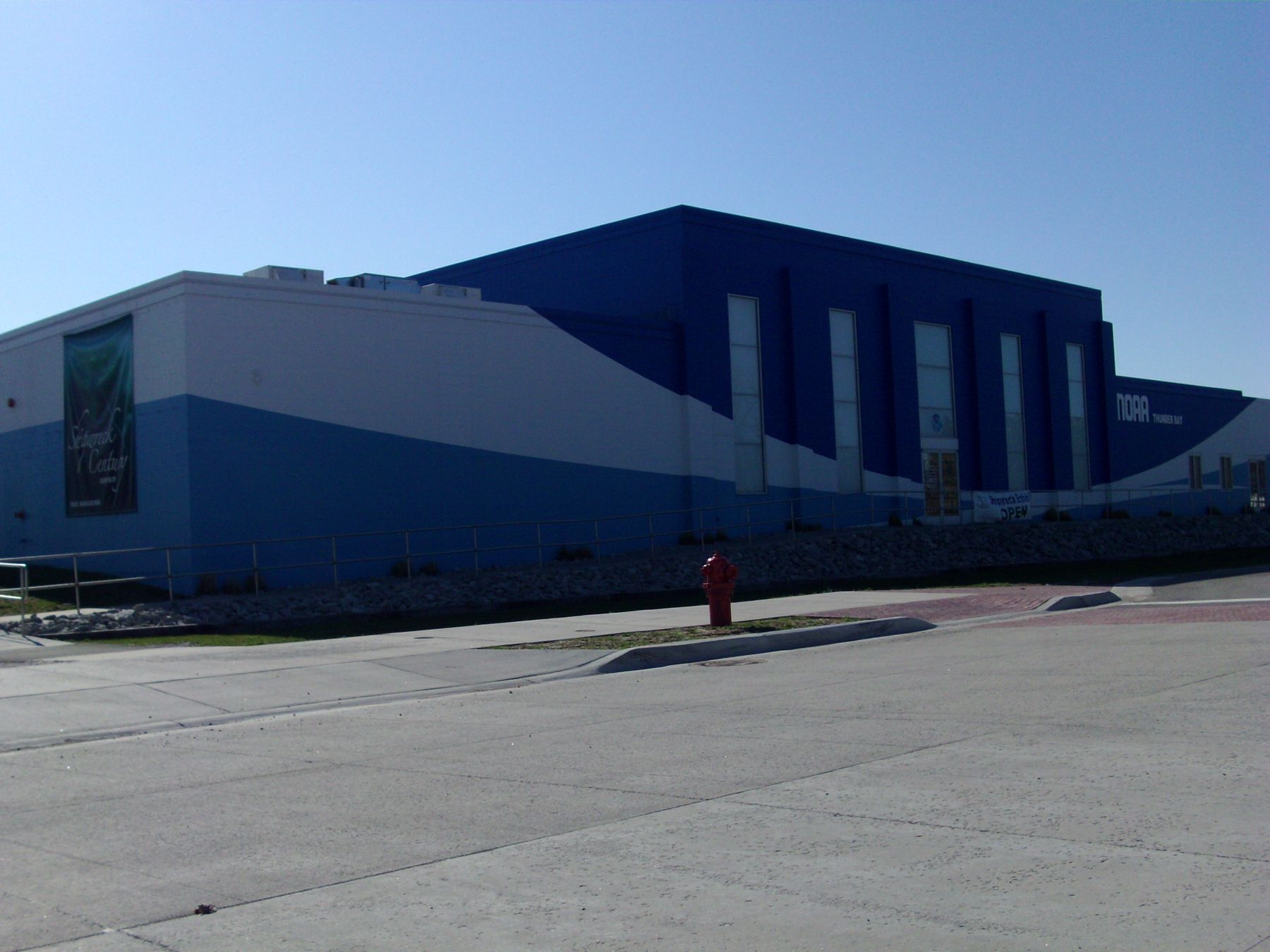
The center sits right on the Thunder Bay River in a large blue and white building. Inside are exhibits on the wrecks and the ships and people they belonged to, an auditorium for films and talks, and an archaeological conservation lab where artifacts from the lake are cleaned and preserved. The exhibits change over time, so what you see may differ from a friend's visit a few years ago.
- Start with the exhibits, which give you the sense of scale: how many ships, of what kinds, over how long.
- Look for the conservation work, which shows how fragile objects from the lakebed are treated once they reach air.
- Check whether a film or talk is scheduled in the auditorium while you are there.
An hour or two, whatever the weather
Give the center at least an hour, and two if the subject grabs you. It is the most weather-proof stop on the tour, which makes it a good anchor for a grey or windy day; you can move it earlier or later in your plan to dodge the rain. Opening days and hours vary through the year, so check them before you drive up.
Park in the center's own lot beside the river. From the building you can walk along the riverbank and look downstream toward the harbor and the light at the river mouth.
This is one of the five stops in the short day, and the one we would least want you to skip. Everything else on the tour, from the lighthouses to the harbor works, makes more sense once you have seen what the lake did to the ships that sailed it.
Shipwreck country through the seasons
The center is an indoor stop, so the season matters less here than anywhere else on the tour. In summer the river outside is busy with boats and the building can be busy too. Autumn and spring visits are quieter. In winter, when the bay is grey or frozen, the exhibits are often the best way to get a feel for Thunder Bay at all, though shorter winter opening times are worth checking first.
Up the river to the island
From the center, follow the river upstream for about a mile and a half to Island Park, where a covered bridge takes you onto an island in the middle of the river. Both stops belong to the Alpena and Thunder Bay tour.
Every photograph here is credited, with its licence, on who took the photos.