Alpena Light, the tower called Little Red
At the mouth of the Thunder Bay River stands a small cast-iron tower painted bright red, the third light to guide boats into Alpena, best seen from the city marina.
- ALLOW
- About 20 minutes
- FROM OSCODA
- About 1 hour 10 minutes
- PARK OR STAND
- Stand at the city marina, looking across to the breakwater
- NEXT LEG
- Under a mile upriver to the Maritime Heritage Center
- BEST MONTHS
- May to October
- BRING
- Binoculars or a zoom lens
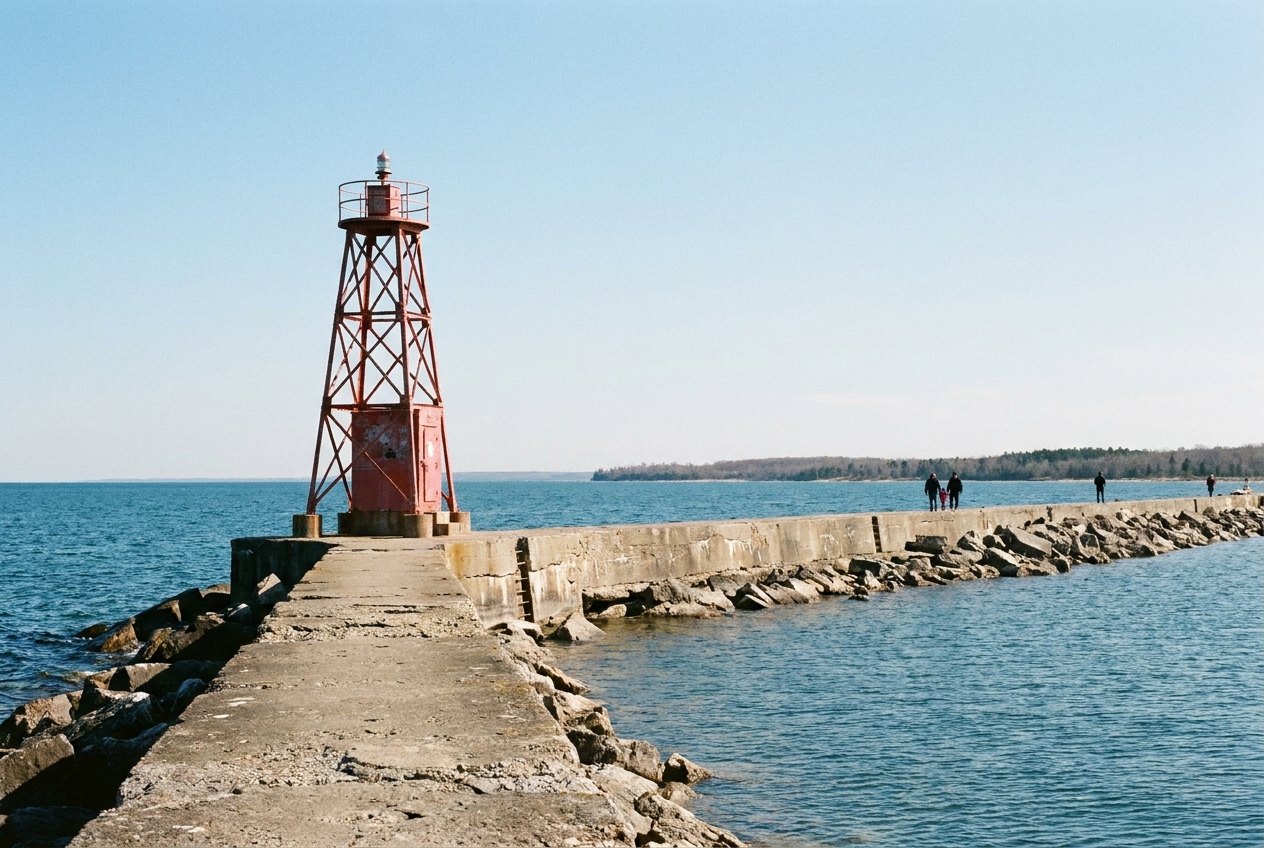
Lighthouses on this coast tend to be white towers with a keeper's house beside them. Alpena Light is something else: a slim open framework of cast iron, 34 feet tall, standing on its own at the end of the north breakwater where the Thunder Bay River runs into the bay, and painted a red you can pick out from anywhere on the waterfront. People in town call it Little Red.
Third light at the river mouth
Boats entering Alpena have to find the mouth of the Thunder Bay River, and the city has had a light there for a long time. The present tower is the third to carry the name. It was first lit in 1914, a skeleton design that let wind and waves pass through it rather than push against a solid wall, which suits a light set at the end of a breakwater.
For its first decades it was not the bright landmark it is now. The red paint came in 1950, and with it the nickname that has stuck ever since. The tower was added to the National Register of Historic Places in 2006. It is still an aid to navigation, marking the harbor entrance for the boats you watch coming and going.
The view from the marina
The best way to see Little Red is from the city marina, looking across the water to the end of the breakwater. You do not need to walk out to it; the view from the marina shows the tower against the open bay, with boats passing in and out of the river below it.
- Morning: the sun comes up over the bay behind the tower, so expect it to show as a dark shape against bright water.
- Late afternoon: the light falls on the red paint from the west, the best time for a photograph.
- Bring binoculars: they let you see the ironwork, which is lost at a distance.
Access to the breakwater itself can change, and breakwaters on the Great Lakes are dangerous in waves or ice. Look from the marina rather than climbing onto the rocks.
05ALSO WORTH THE DETOUR · Harrisville and Sturgeon Point · stop 5Sturgeon Point LighthouseA short stop on the short day
Twenty minutes is plenty here. Find your spot at the marina, watch a boat or two through the harbor entrance and move on. If you walked over from Bay View Park, you may already have the car close by; if not, the marina has its own parking, which fills on summer weekends.
Alpena Light is one of the five stops in the short day. It takes little time and gives you the harbor and the river mouth in one view, which is why we keep it even when the day is tight. If you liked the contrast between a working breakwater light and a classic tower, compare it with the brick tower at Tawas Point on the Tawas tour.
Little Red through the year
The tower is visible all year. Summer brings the most boat traffic and the longest evenings for the late-afternoon light. In autumn the bay is often rougher, and the waves breaking on the breakwater make a better picture than a calm day. In winter, ice can build up on the breakwater and the tower; the marina is quiet and the docks may be closed, so look from wherever there is safe footing.
Upriver to the shipwreck center
From the marina, the next stop is less than a mile away up the Thunder Bay River. The Great Lakes Maritime Heritage Center sits on the river's bank and tells the story of the wrecks that lights like this one were built to prevent.
Every photograph here is credited, with its licence, on who took the photos.