Alpena, Thunder Bay and the Presque Isle shore
The biggest town on the Sunrise Side, a marine sanctuary full of shipwrecks, a fossil quarry and two lighthouses on one harbor, with a wild state park at the far end of the road.
- FROM OSCODA
- About 1 hour 10 minutes north
- BEST SEASON
- Summer and early autumn
- GETTING THERE
- North from Oscoda on US-23
- BRING
- Binoculars, walking shoes, a jacket, a full tank
Keep driving north from Oscoda on US-23 for a little over an hour, past Harrisville and the long Alcona shore, and the highway carries you into Alpena, the largest city on this stretch of Lake Huron. It sits at the head of Thunder Bay, where the Thunder Bay River meets the lake, and it is the one town on the Sunrise Side where the lake's own history is the main subject rather than the backdrop.
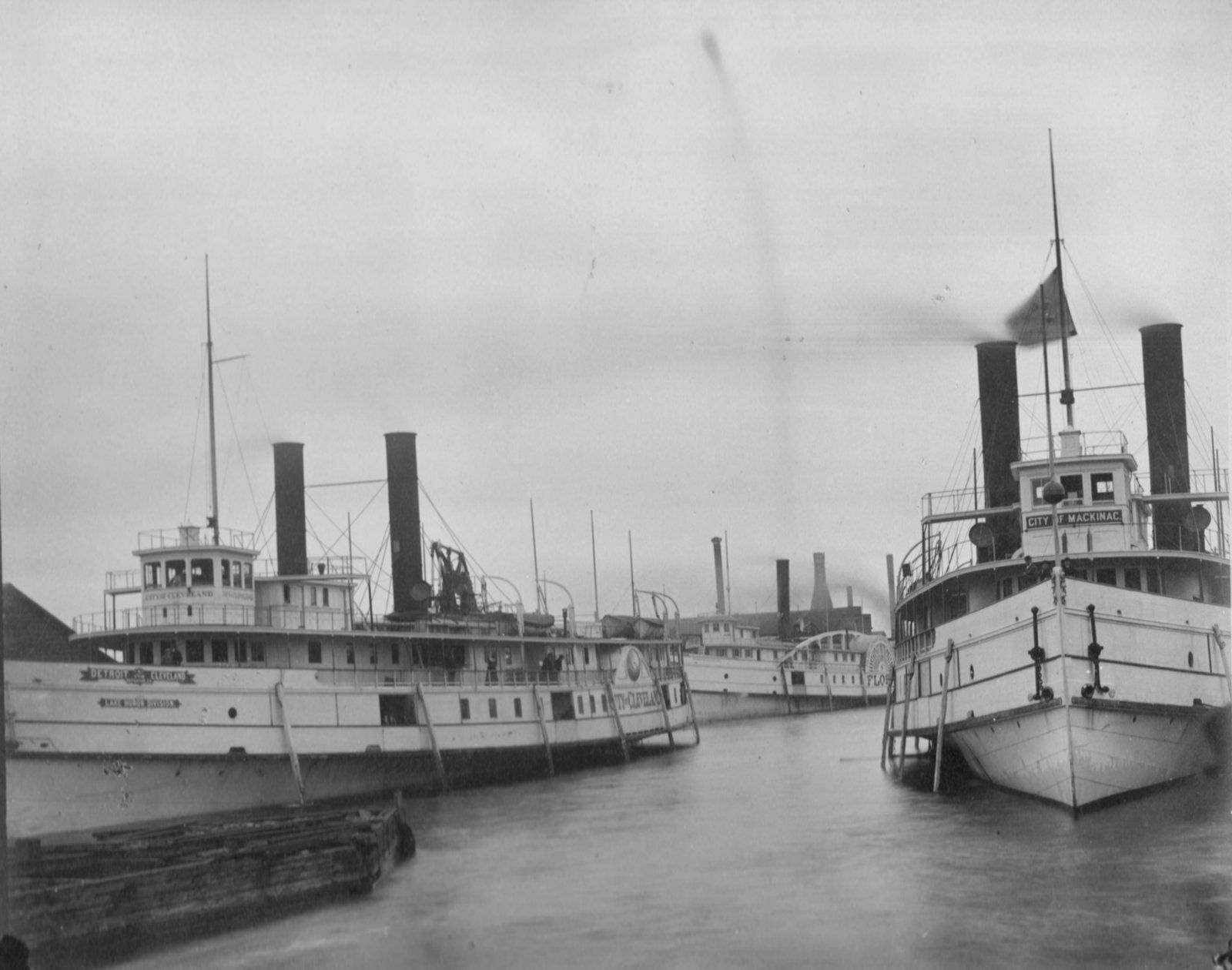
Most of that history lies under water. Thunder Bay National Marine Sanctuary was designated in 2000, the first national marine sanctuary on the Great Lakes, and in 2014 it grew to cover about 4,300 square miles of Lake Huron. Inside it lie an estimated 116 historic shipwrecks, from wooden schooners to steel freighters, many kept in good condition by the cold fresh water. You do not need to go out on the lake to understand them. The sanctuary's visitor center in town tells the story on dry land, and the lighthouses up the coast show what the ships were trying to avoid.
A lake town that keeps its wrecks close
This is a longer trip than the tours closer to Oscoda, and it falls into two halves. The first six stops are all in Alpena, a few minutes apart: two waterfront parks, the small red breakwater light, the sanctuary's visitor center, an island in the river and the city's museum. The last four take you north of town into Alpena and Presque Isle counties, where the shore turns rocky and lightly settled: an old limestone quarry that is now a state park, two lighthouses on Presque Isle Harbor and a state park left mostly wild.
Limestone ties the two halves together. The rock under this coast formed on the floor of a warm Devonian sea, and it is full of fossils you can pick out at the museum's fossil park and on the quarry floor at Rockport. The same rock gave Alpena its industry, and farther north it lies under the flat, cobbled beaches of Thompson's Harbor.
Ten stops from the south beach to the iris shore
- Mich-e-ke-wis Park, the city beach park on State Street as you come in from the south.
- Bay View Park, with its band shell and a breakwall path beside the boat harbor.
- Alpena Light, the red skeleton tower known as Little Red, seen from the city marina.
- The Great Lakes Maritime Heritage Center, the sanctuary's visitor center on the Thunder Bay River.
- Island Park, reached by a covered wooden bridge in the river wildlife sanctuary.
- The Besser Museum for Northeast Michigan, with a planetarium, a historic village and a fossil park.
- Rockport State Recreation Area, an abandoned quarry and deep harbor north of town.
- The Old Presque Isle Lighthouse, a stone and brick tower from 1840 on Presque Isle Harbor.
- The New Presque Isle Lighthouse, about two miles farther up the same road.
- Thompson's Harbor State Park, undeveloped shore with dunes, cedar and a rare wildflower.
Inside Alpena the order is simply the order you meet things: US-23 runs along the bay as State Street, passes the harbor, crosses the river and turns up beside it. The museum sits a short way inland. From there you head back to US-23 and out of town to the north. The two Presque Isle lights lie on Grand Lake Road, east of the highway, and Thompson's Harbor is back on US-23 farther north.
02ALSO WORTH THE DETOUR · Tawas Bay and Tawas Point · stop 2Tawas Point Lighthouse, still lit after the sand movedFive stops inside the city
With only part of a day, stay in town. The short version is Mich-e-ke-wis Park, Alpena Light, the Great Lakes Maritime Heritage Center, Island Park and the Besser Museum. None is more than a few minutes' drive from the next, and together they give you the beach, the harbor, the shipwreck story, a walk in the river sanctuary and the region's own museum. Allow about four hours on the ground, plus the drive up and back.
The short day leaves out the northern half, and that is the part with the most open shoreline. If the weather is clear and you still have the afternoon, the Presque Isle lighthouses are the first thing to add back.
Choosing your month on Thunder Bay
June through September is the easiest stretch. Museums and lighthouse grounds keep their longest seasons, the evenings are long enough to finish all ten stops, and the beaches are at their best, though the water at this end of Lake Huron stays cold well into summer. Late spring brings the dwarf lake iris into flower along the shore at Thompson's Harbor, a good reason to time the trip for late May or early June.
September and early October are quieter, with clear air over the bay and colour coming into the woods north of town. In winter the city stops still make a short outing, but the beaches belong to wind and ice, and the lighthouse museums open only in the warmer months. Opening times change from year to year, so check before you set out. Rockport and Thompson's Harbor are both dark sky preserves, and the state parks need a Michigan vehicle pass; check the current rules before you go.
Seventy minutes up, and the long way home
From the US-23 bridge over the Au Sable in Oscoda, follow US-23 north. Harrisville comes after about half an hour, Ossineke a while later, and Mich-e-ke-wis Park appears on your right as the highway becomes State Street, about an hour and ten minutes from the bridge.
The full tour fills most of a summer day. Thompson's Harbor is close to two hours from Oscoda, so start early. The road home is US-23 south the whole way: back through Alpena, past Ossineke and down the Alcona shore, with the lake on your left for long stretches. If you have time for one more stop, the light at Sturgeon Point is a short detour off the highway north of Harrisville.
Limestone ties the two halves together.
Every photograph here is credited, with its licence, on who took the photos.
The ten stops
In the order you reach them.
Mich-e-ke-wis Park, where Alpena begins
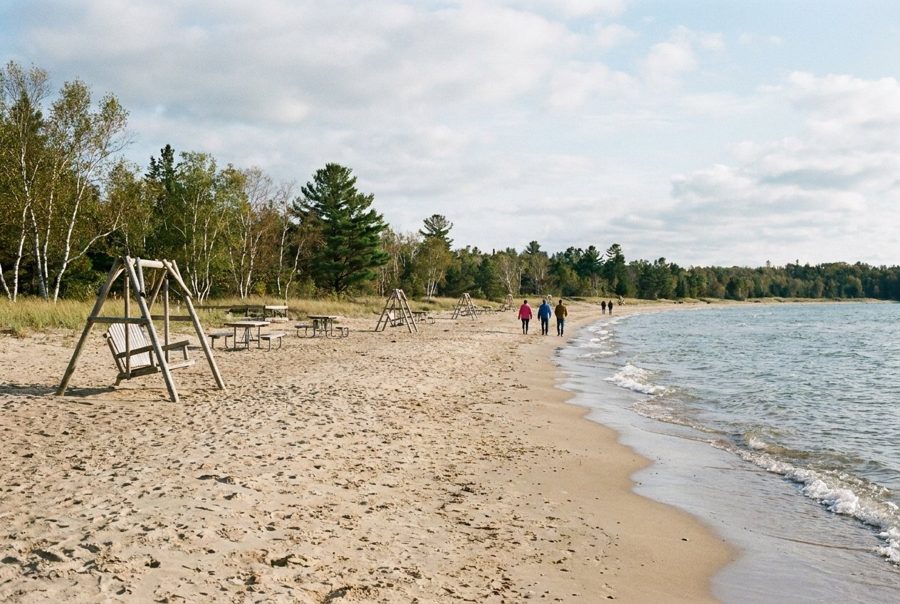
Coming into Alpena from the south, the city's beach park is the first place to pull over: a swimming beach on Thunder Bay, a bike park and a wide lawn the wind keeps busy.
In the short day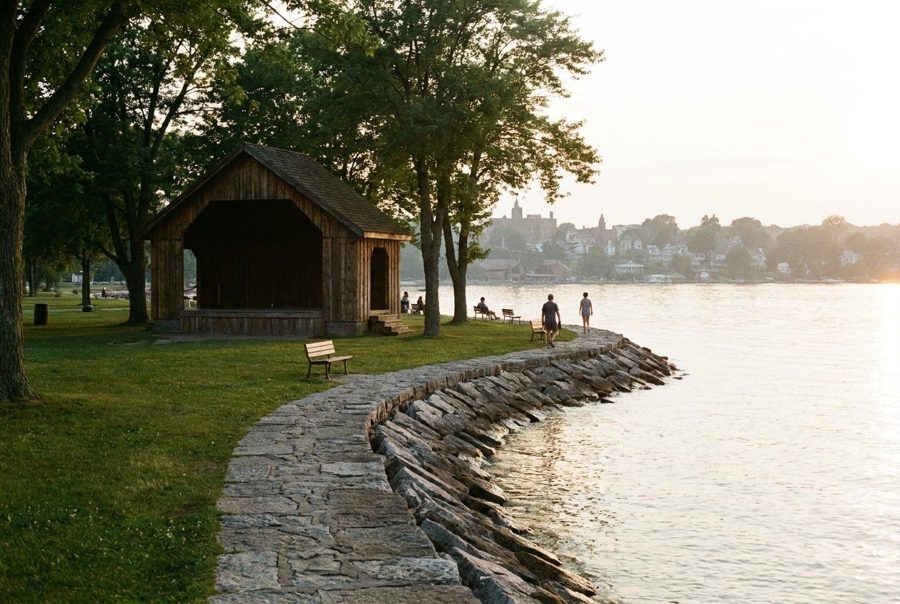
Bay View Park and the breakwall
Beside the boat harbor near downtown Alpena, a lawn with a band shell and a breakwall path give you the widest easy view of Thunder Bay on the whole tour.
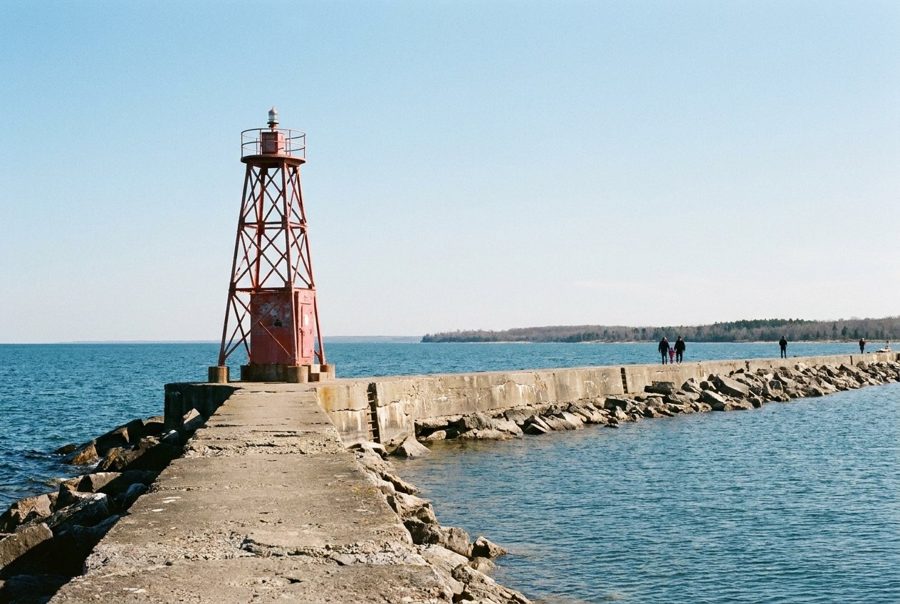
Alpena Light, the tower called Little Red
At the mouth of the Thunder Bay River stands a small cast-iron tower painted bright red, the third light to guide boats into Alpena, best seen from the city marina.
In the short day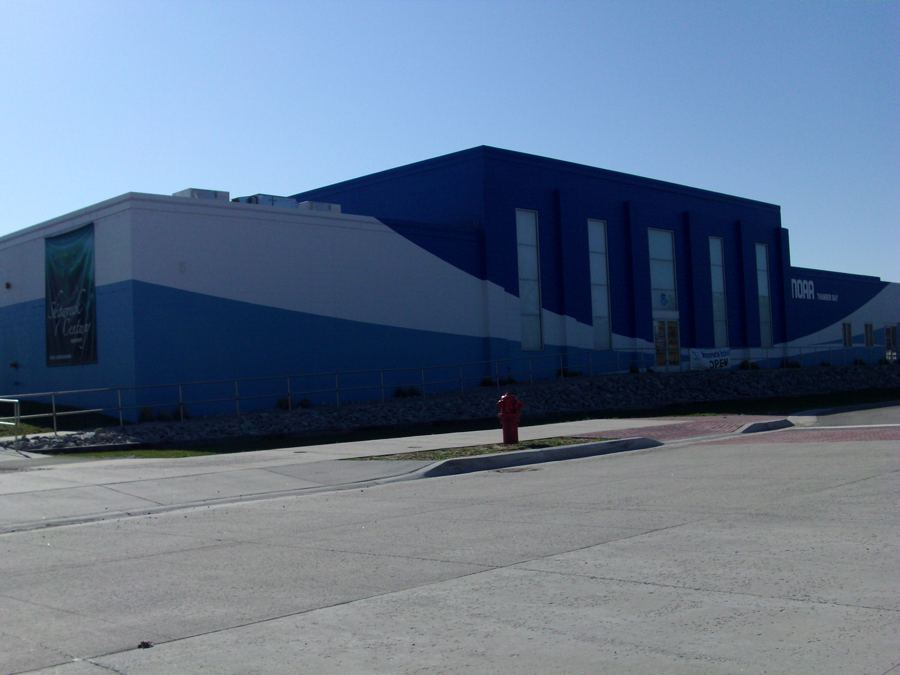
The Great Lakes Maritime Heritage Center
On the bank of the Thunder Bay River, the sanctuary's headquarters and visitor center explains the shipwrecks lying in 4,300 square miles of Lake Huron without asking you to get wet.
In the short day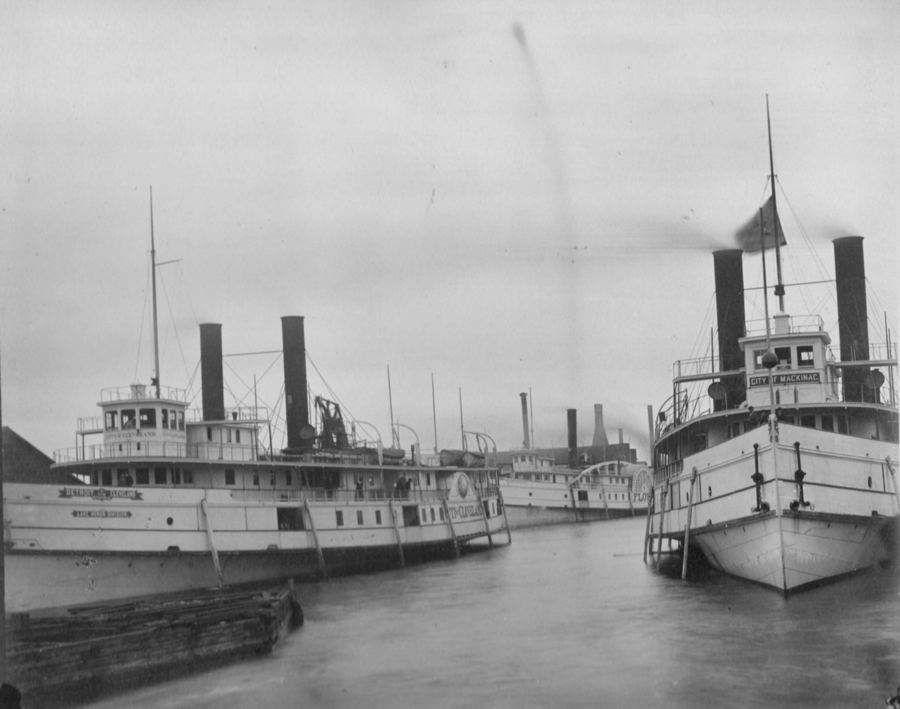
Island Park, in the middle of the river
A covered wooden bridge leads onto a wooded island in the Thunder Bay River, part of a wildlife sanctuary of about 500 acres kept inside the city limits of Alpena.
In the short day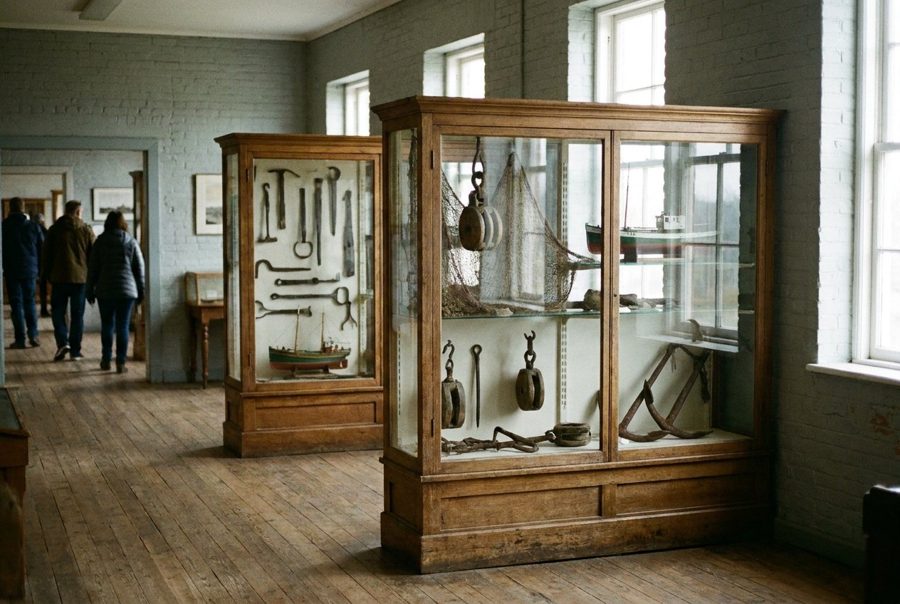
The Besser Museum for Northeast Michigan
A block maker's gift became the region's museum: a planetarium, a pendulum two storeys high, a village of old buildings, a fishing tug and fossils you can dig for yourself.
In the short day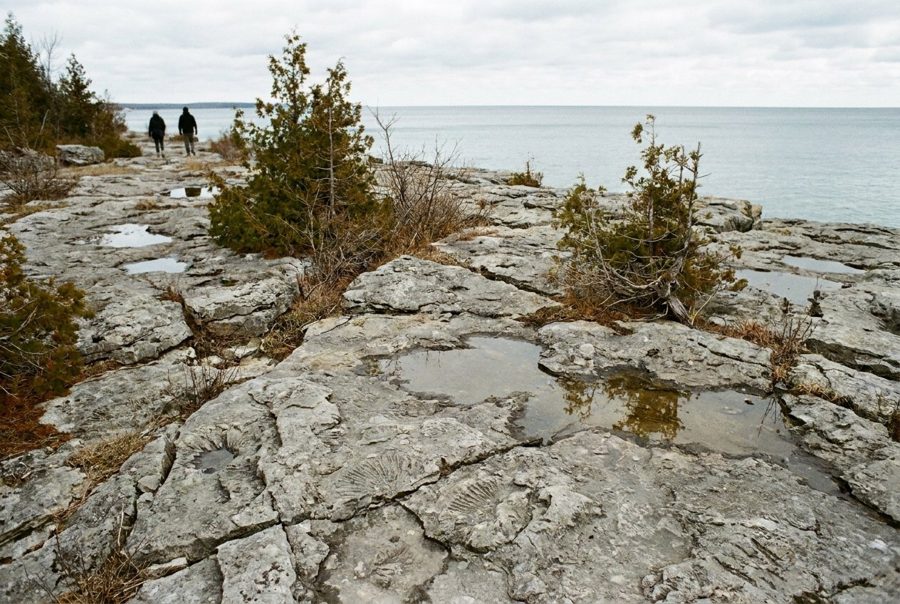
Rockport and its old limestone quarry
North of Alpena, an abandoned limestone quarry has become a state park where you can walk the quarry floor looking for Devonian fossils, beside a deep-water harbor on Lake Huron.
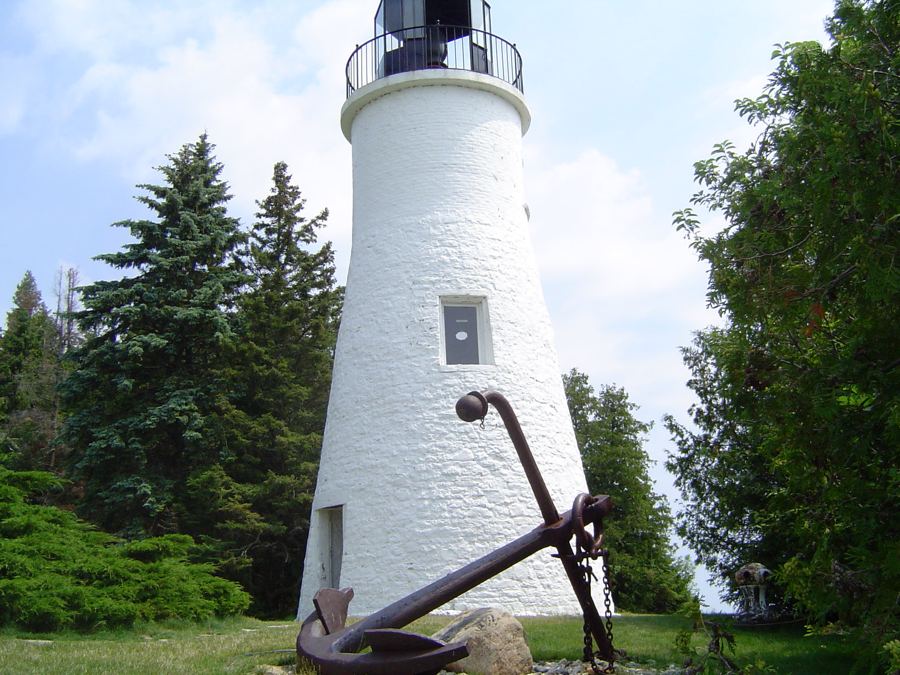
The Old Presque Isle Lighthouse
On a sheltered harbor north of Alpena stands one of the older light towers on the Great Lakes, built of stone and brick in 1840, with a keeper's house that is now a museum.
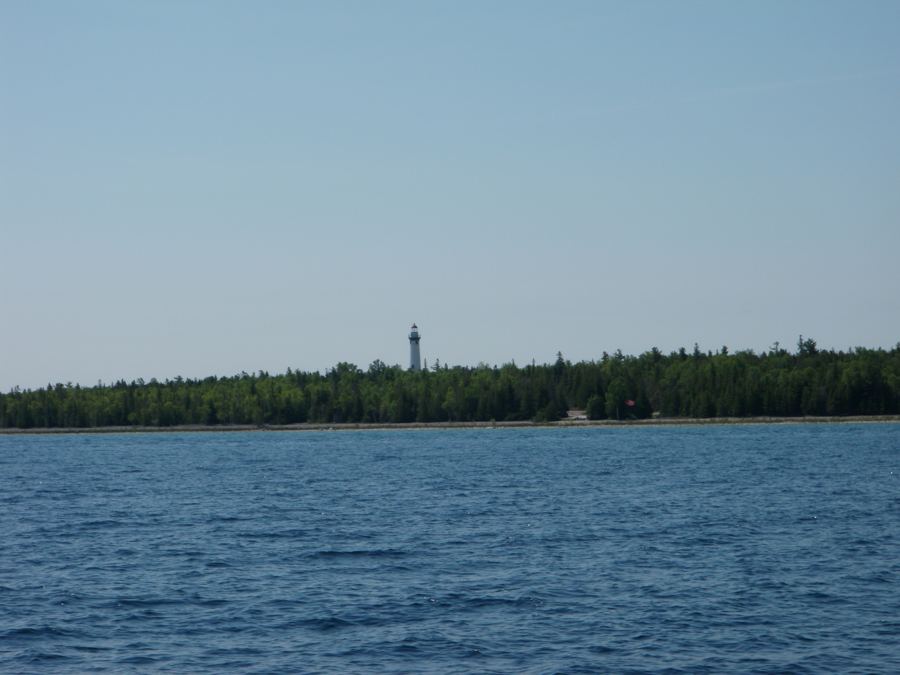
The New Presque Isle Lighthouse
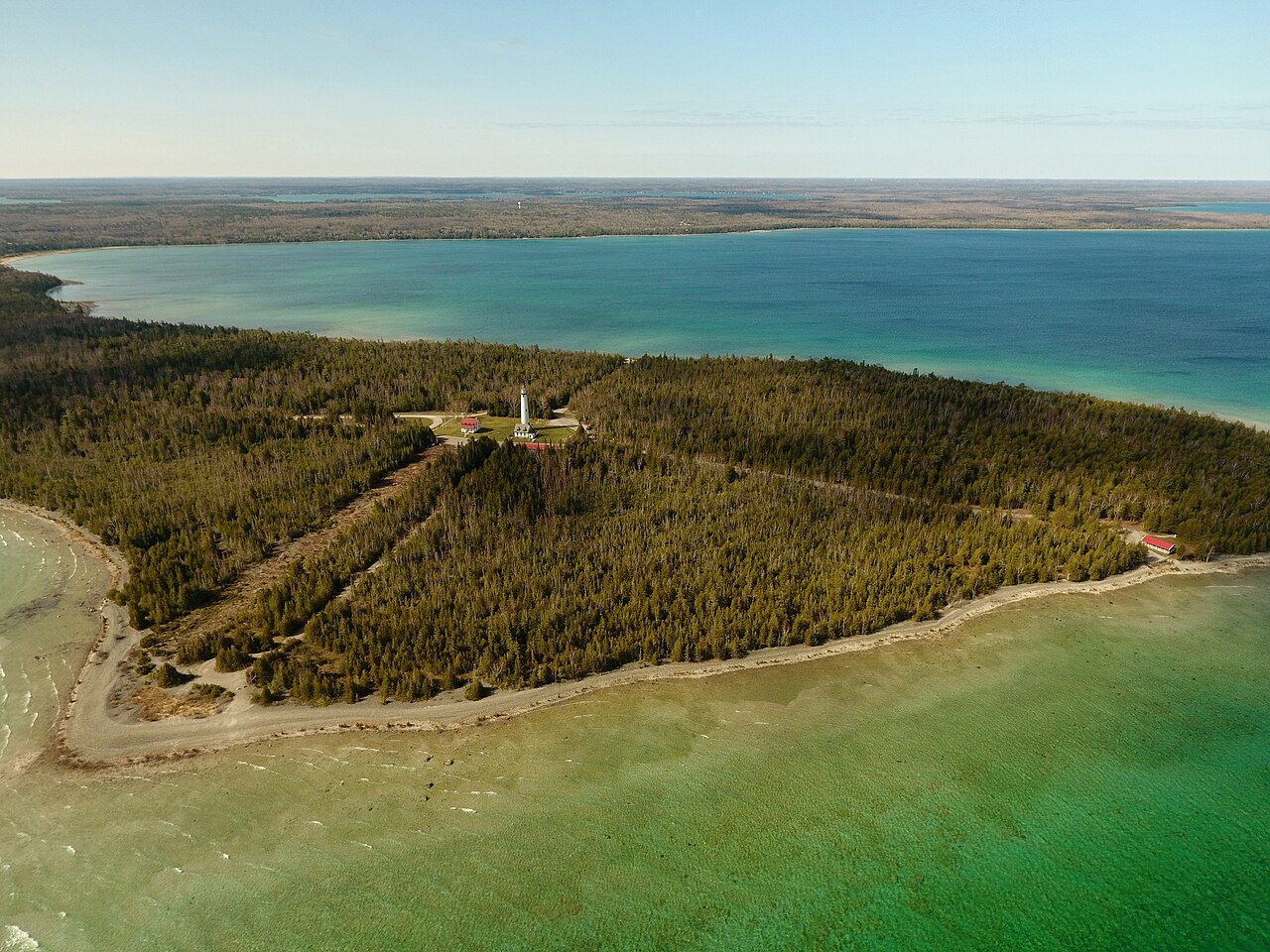
Two miles up the peninsula from the old light, a white tower 113 feet tall rises above the trees, one of the tallest on the Great Lakes, with a cast-iron stair of 138 steps.
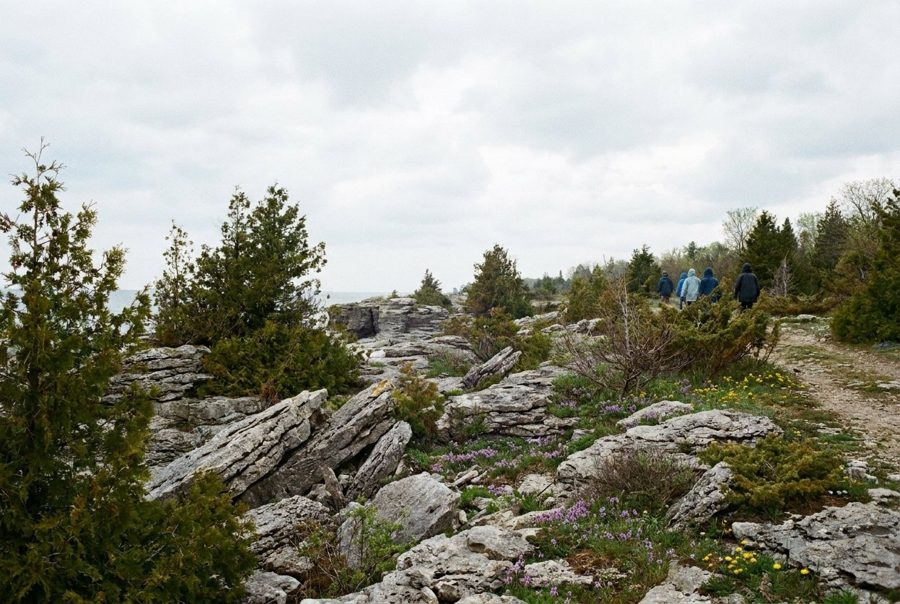
Thompson's Harbor, the wild end of the road
The tour ends on a long stretch of undeveloped Lake Huron shore: cobble beaches, low dunes, cedar woods and one of the largest known stands of a small, threatened iris.